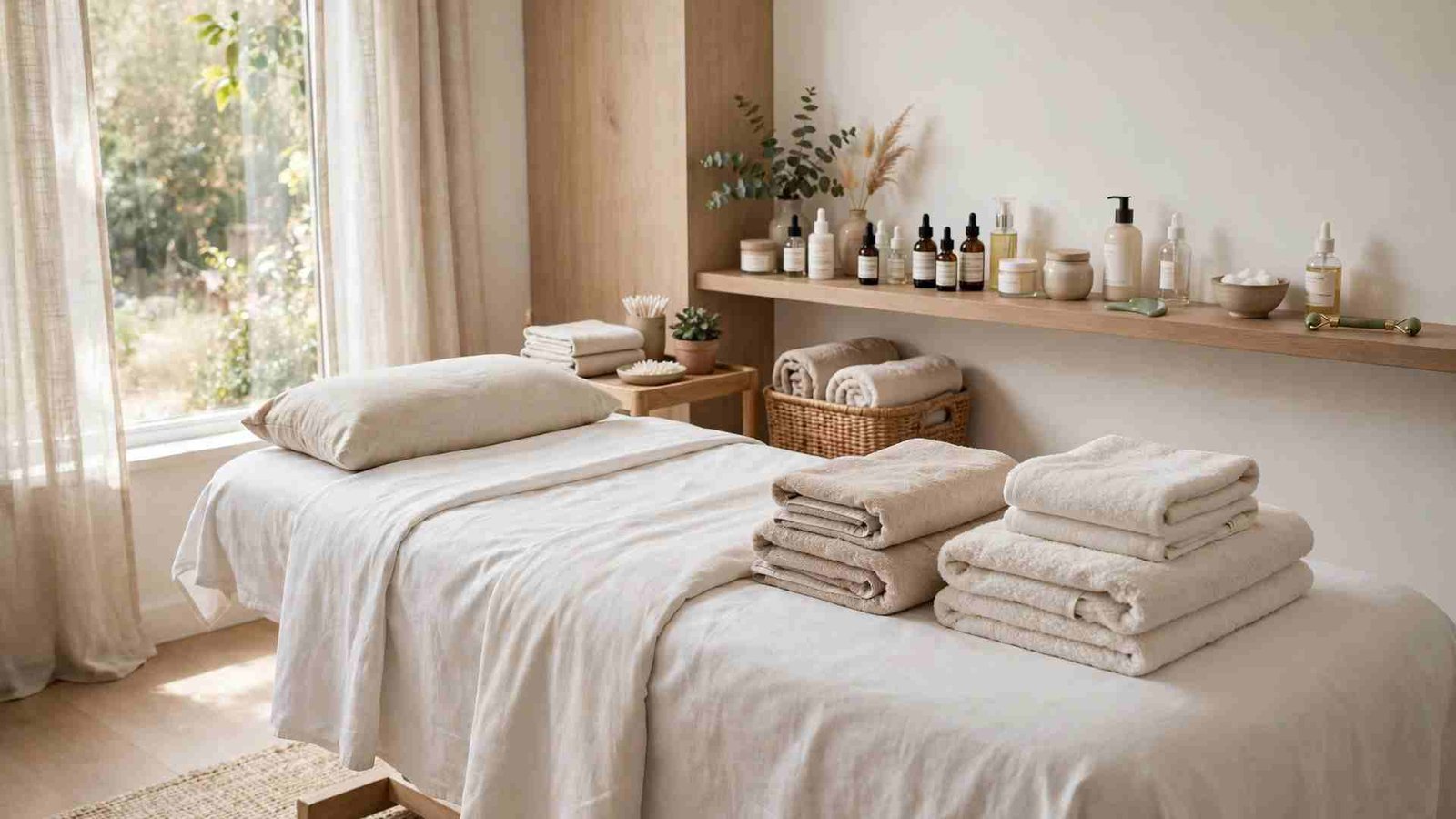
Estheticians are licensed skincare professionals the experts behind facials, chemical peels, waxing, and skin analysis at spas, salons, dermatology offices, and med spas.
It is a career that blends science, artistry, and human connection, with training measured in months rather than years.
But licensing rules swing dramatically between states, from 300 to over 1,000 required training hours, and the difference between an esthetician license, a cosmetology license, and medical esthetics confuses nearly every beginner.
This guide clears it all up: the licensing path, costs, exams, specialties, and the business realities most guides skip.
This article is general career information, not legal advice. Verify requirements with your state’s board of cosmetology.
Understand The Esthetician Career
An esthetician’s core work is improving and maintaining skin health: analyzing skin types and conditions, performing facials and exfoliation treatments, applying chemical peels and microdermabrasion, removing unwanted hair through waxing and sugaring, applying makeup, and recommending home-care regimens. Work settings include day spas, resort spas, salons, dermatology and plastic surgery offices, med spas, and self-employed studio or suite rentals.
It is worth distinguishing three related but different credentials. An esthetician license covers skin care services only. A cosmetology license is broader hair, skin, and nails and requires far more training hours (often 1,000 to 1,600). A medical esthetician is a licensed esthetician with advanced training who works in clinical settings performing pre- and post-operative skin care, often alongside dermatologists. Choose your target before enrolling, because the training paths and hour requirements differ.
Check Your State’s Training Hour Requirements
This is the single most important research step, because required hours vary enormously: some states require as few as 300 hours, most fall in the 600 to 750 range, and a few exceed 1,000. California requires 600 hours; Illinois requires 750; Washington requires 750 for a basic esthetician license and more for master esthetician status. Minimum age is typically 16 or 17, and most states require a high school diploma or equivalent.
Also check whether your state allows apprenticeships as an alternative to school several do, though apprenticeship hour requirements are usually much higher (often around 2,000 hours). And note the emerging Interstate Cosmetology Licensure Compact, which may eventually simplify moving your license across states but is still in early adoption. For now, assume you will need to meet each new state’s requirements individually if you relocate.
Complete An Approved Esthetics Program
Enroll in a state-approved esthetics program at a licensed school — community colleges, beauty schools, and dedicated esthetics academies all offer them. Full-time students typically finish in four to six months; part-time students in nine to twelve months. Tuition generally ranges from $5,000 to $15,000 depending on the school and state, and many schools offer federal financial aid.
A quality curriculum covers skin anatomy and physiology, skin analysis and conditions, facial treatments and massage techniques, chemical peels and exfoliation, waxing and hair removal, makeup application, sanitation and safety, and business basics. The hands-on clinic portion — working on real clients under instructor supervision — is where the learning actually happens, so favor schools with busy student clinics. Before enrolling, verify the school’s state approval and licensure exam pass rates; a cheap program with a poor pass rate is the most expensive option of all.
Pro tip: Treat the student clinic like a real job from week one rebook your practice clients, note their skin concerns, follow up. Students who build a small book of regulars in the clinic graduate with something most new hires lack: proof they can retain clients. And volunteer for the difficult cases reactive skin, severe acne because that’s where your hands learn fastest.
Pass Your Licensing Exams And Apply
After completing your hours, you will take your state’s licensing exams. Most states use a written theory exam plus a hands-on practical exam, frequently based on tests developed by the National-Interstate Council of State Boards of Cosmetology (NIC). The theory exam covers skin science, sanitation, treatments, and state law; the practical exam has you demonstrate core services a facial, waxing, makeup application on a model under timed, observed conditions.
Prepare with your school’s review materials and NIC practice resources, and take the practical exam’s sanitation protocols deadly seriously candidates fail more often on infection-control procedure errors than on technique.
Pack your kit the night before — disposables, implements, linens, labeled containers — and bring backups of anything that could run out or break. Common mistake: cross-contamination slips under pressure, like touching a clean supply after touching the model or skipping hand sanitation between steps. Drill the sanitation choreography until it’s automatic, because nerves make you skip steps you “know.” Exam and application fees typically total $100 to $300. Once you pass, submit your license application with proof of training and exam scores. Licenses generally renew every one to two years, and some states require continuing education hours per cycle.
Choose A Specialty To Stand Out
General estheticians compete on price; specialists compete on expertise. High-value specialties include medical esthetics (working in dermatology and plastic surgery practices, often with advanced modalities), acne specialization, anti-aging treatments, oncology esthetics (skin care for cancer patients, requiring specialized training), lash and brow artistry, and sugaring. Each specialty commands higher service prices and builds a more loyal clientele.
Pursue advanced certifications through reputable educators — not weekend product-company classes alone — and document your training for your portfolio. Specializing early also focuses your continuing education spending, which matters because quality advanced training is expensive and you want every dollar aimed at your niche.
Build Your Clientele And Income
New estheticians typically start as employees in spas or salons, earning an hourly wage plus tips and commission, or rent a chair or suite and keep a larger share of service revenue minus overhead. Either way, your income grows with your book of repeat clients. The unglamorous truth: retention beats acquisition. Rebooking clients before they leave, following up after appointments, and remembering personal details build the loyal base that sustains a career.
Market yourself from day one: a professional Instagram portfolio of before-and-after work (with client permission), Google Business reviews from happy clients, and referral incentives all compound over time. Track your numbers — average ticket, rebooking rate, retail sales — because retail product sales often add 10 to 20 percent to an esthetician’s income and employers notice who sells.
A med-spa esthetician I know doubled her rebooking rate with one script change: instead of asking “do you want to rebook?” at checkout, she says “I’d like to see you again in four weeks — I have Tuesday or Thursday.” Presumptive, specific scheduling beats open-ended questions every time. Little changes like that are what separate a full book from a patchy one. With experience, paths open into training, brand representation, spa management, or owning your own studio.
FAQs:
How long does it take to become an esthetician?
Full-time programs take four to six months; part-time takes nine to twelve months. Add exam scheduling and license processing, and most people are licensed within six to twelve months of starting school.
How much does esthetician school cost?
Tuition typically ranges from $5,000 to $15,000, plus $100 to $300 in exam and licensing fees. Community college programs are usually the most affordable; private beauty schools cost more but may offer flexible schedules.
What is the difference between an esthetician and a cosmetologist?
An esthetician license covers skin care services only and requires fewer training hours. A cosmetology license covers hair, skin, and nails, requires substantially more hours, and qualifies you for a broader range of salon work.
Can I become an esthetician online?
Theory coursework can be done online, but every state requires in-person hands-on training hours and a practical exam. Fully online licensure is not possible — beware any program claiming otherwise.
How much do estheticians make?
Earnings vary widely by market, setting, and clientele. The national median sits in the low-$40,000s, with experienced specialists and med-spa estheticians in strong markets earning $60,000-plus including tips, commission, and retail sales.
Do esthetician licenses transfer between states?
Sometimes, through reciprocity or endorsement but rules vary, and some states require additional hours or exams. Check the new state’s board before relocating; the Interstate Cosmetology Licensure Compact may eventually ease this.
Conclusion:
Becoming an esthetician is a well-defined journey: confirm your state’s hour requirements, complete an approved program with a strong hands on clinic, pass your theory and practical exams, and get licensed.
What separates thriving estheticians from struggling ones is what happens next specializing in a high-value niche, obsessing over client retention, and treating your career like the business it is.
If skincare is your passion, research state-approved schools near you, compare their exam pass rates, and enroll. Your treatment room is closer than you think.