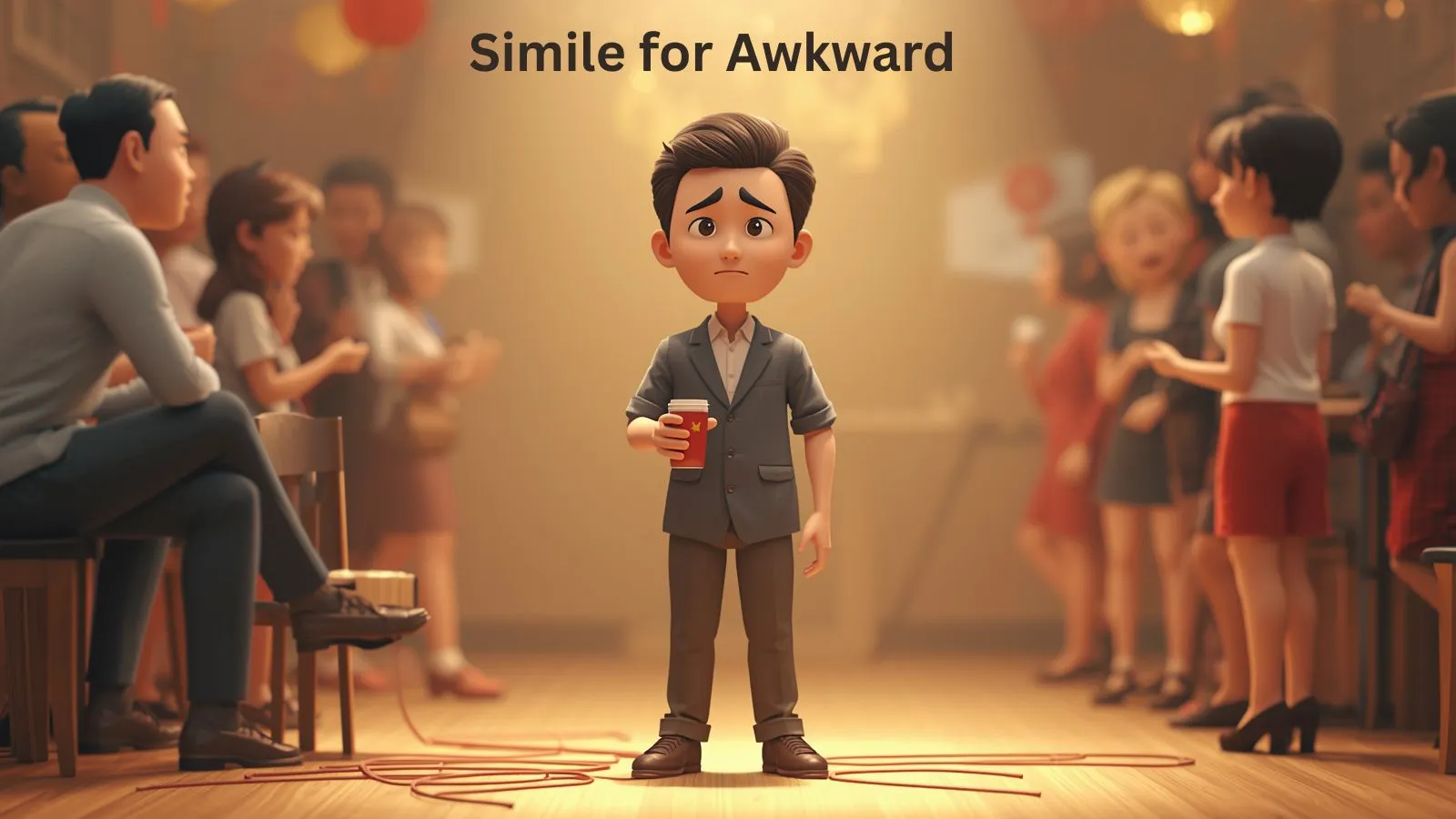
Everyone has lived through a moment so awkward that words failed. Maybe you waved back at someone who was not waving at you, or you called a teacher mom in front of the whole class. A simile for awkward turns that squirming feeling into an image readers instantly recognize, like a penguin trying to fly or a long pause after a bad joke. This collection gives you 89 complete similes for awkward situations, silences, and encounters, each with a short explanation of what it conveys. Use them in stories, essays, comedy writing, or speeches to make discomfort funny and relatable.
Similes for Awkward Silences
Nothing is more awkward than a silence that stretches too long.
Like a paused video buffering forever, the silence hung between them with no end in sight. This conveys a conversation frozen at the worst possible moment.
Like the moment after a joke nobody laughs at, the quiet felt thick enough to touch. This suggests the specific pain of failed humor.
Like an elevator ride with a stranger, they both stared at the floor waiting for it to end. This conveys polite, trapped discomfort.
Like a phone call where both people talk at once, then stop, then talk again, their timing was hopeless. This suggests mutual embarrassment from clumsy rhythm.
Like the quiet in a classroom during a pop quiz, nobody dared to make a sound. This conveys tense, watchful silence.
Like a dropped call in the middle of an argument, the silence left everything unresolved. This suggests awkwardness mixed with unfinished business.
Like waiting for a text back that never comes, the pause stretched into something painful. This conveys modern, anxious awkwardness.
Like the hush after someone says the wrong name, the air went completely still. This suggests the shockwave of a social mistake.
Like a song ending in a quiet car, the silence suddenly made everything loud. This conveys how quiet amplifies discomfort.
Like two people reaching for the same door handle, their words collided and then died. This suggests physical comedy turned verbal.
Similes for Socially Awkward Moments
These describe the classic cringe of social missteps.
Like waving back at someone who was waving at the person behind you, he wanted the floor to swallow him. This conveys instant, public embarrassment.
Like calling your teacher mom, the words escaped before she could stop them. This suggests a slip that reveals too much comfort.
Like a penguin trying to fly, his attempt at cool confidence flopped completely. This conveys effort that is endearing but doomed.
Like showing up to a costume party in normal clothes, she felt exposed and out of place. This suggests being unprepared in a very visible way.
Like a high five left hanging, his gesture died in midair. This conveys rejection in its smallest, most awkward form.
Like laughing at a joke you did not understand, his chuckle came a beat too late. This suggests the panic of pretending to fit in.
Like a hug that turns into a handshake halfway through, their greeting collapsed into chaos. This conveys the comedy of mismatched intentions.
Like singing happy birthday to the wrong person, the celebration curdled instantly. This suggests well meant effort gone wrong.
Like a selfie taken at the exact wrong moment, his smile froze into something strange. This conveys being caught unprepared by attention.
Like introducing two people who already know each other, her helpfulness backfired completely. This suggests good intentions creating pure cringe.
Similes for Awkward Encounters
Running into the wrong person at the wrong time deserves its own comparisons.
Like bumping into your ex at the grocery store, he suddenly found the cereal aisle fascinating. This conveys the desperate need to look busy.
Like meeting your date’s parents in pajamas, the first impression was ruined beyond repair. This suggests being caught at your least presentable.
Like a pop quiz on the first day of school, the surprise encounter left him blank. This conveys unpreparedness meeting pressure.
Like two cats circling the same sunny spot, they danced around each other politely. This suggests territorial politeness masking tension.
Like a surprise party for someone who hates surprises, the joy landed completely wrong. This conveys mismatched expectations.
Like finding your teacher at the same restaurant, the worlds collided uncomfortably. This suggests the weirdness of context collapse.
Like a group chat gone silent after your message, the encounter died in real time. This conveys the dread of being ignored.
Like sitting next to a stranger on a long flight, they negotiated armrest territory in silence. This suggests forced intimacy with no connection.
Like a reunion with someone whose name you forgot, every sentence was a minefield. This conveys the strain of hiding a social failure.
Like a video call where your camera turns on unexpectedly, she was seen before she was ready. This suggests modern, technological awkwardness.
Similes for Feeling Out of Place
Like a fish riding a bicycle, he had no idea what he was doing at the formal dinner. This conveys total mismatch between person and situation.
Like a snowman in summer, she felt herself melting under the attention. This suggests discomfort that visibly worsens.
Like the only person not laughing at an inside joke, he smiled without understanding. This conveys exclusion disguised as inclusion.
Like a kazoo in an orchestra, her contribution clashed with everything. This suggests being loudly, comically wrong for the setting.
Like wearing socks with sandals to a fashion show, his confidence wilted instantly. This conveys a style disaster in the worst venue.
Like a typo in a wedding invitation, the mistake was small but impossible to ignore. This suggests minor errors with major cringe.
Like a toddler at a business meeting, she felt small and out of her depth. This conveys feeling young and unqualified.
Like a phone ringing during a wedding vow, his interruption shattered the moment. This suggests terrible timing with maximum embarrassment.
Like a plot twist nobody asked for, her comment derailed the conversation. This conveys disruptive awkwardness.
Like a speed bump on a smooth road, the moment jolted everyone uncomfortably. This suggests a sudden, jarring break in flow.
More Cringeworthy Similes for Awkward
Like a balloon deflating with a squeak, his confidence leaked out noisily. This conveys embarrassing, audible loss of composure.
Like a PowerPoint freezing during a presentation, her brain locked at the worst moment. This suggests public mental failure.
Like autocorrect changing an important text, his words came out completely wrong. This conveys unintended, mortifying mistakes.
Like a whoopee cushion at a funeral, the humor was catastrophically misplaced. This suggests comedy in the worst possible context.
Like tripping on flat ground, there was no excuse for the stumble. This conveys clumsiness with zero justification.
Like a microwave beeping in a silent library, his phone announced itself loudly. This suggests small noises with huge social cost.
Like a cake collapsing as it leaves the oven, her big moment fell flat. This conveys disappointment after visible effort.
Like a dance move from the wrong decade, his attempt at fun looked ancient. This suggests being out of step with the times.
Like a sneeze during a moment of silence, the interruption was innocent but awful. This conveys blameless yet mortifying timing.
Like a WiFi signal dropping mid sentence, the connection cut at the crucial point. This suggests modern awkwardness everyone recognizes.
Like a goldfish in a shark tank, she felt small among confident strangers. This conveys vulnerable smallness in a tough crowd.
Like a pop up ad during a serious movie, his comment broke the mood completely. This suggests jarring, unwanted interruption.
Like socks sliding down inside your shoes, the discomfort was constant and unfixable. This conveys low grade, persistent awkwardness.
Like a group photo where you blinked, the moment was ruined just for him. This suggests personal embarrassment frozen in time.
Like a joke explained after nobody laughed, the follow up made everything worse. This conveys the spiral of trying to fix cringe.
How to Use Awkward Similes in Writing
Awkward similes work best when the reader has lived the moment you describe. Pick comparisons rooted in everyday embarrassment, because shared cringe creates instant connection. Use them to release tension in a heavy scene or to make a character lovable through their flaws. Keep the simile short and punchy. Awkwardness is funniest when described quickly, then left to sting. Finally, match the severity. A minor fumble deserves a light image like a high five left hanging, while a true disaster earns something bigger like a whoopee cushion at a funeral.
Common Mistakes to Avoid
The biggest mistake is overexplaining the joke. If you compare a moment to waving at the wrong person, readers already feel the cringe, so do not add three more sentences about it. Another error is using awkward similes for genuinely painful moments. Comparing real grief to a sitcom mishap can feel cruel. Writers also repeat the same structure. Vary between silences, encounters, and physical comedy so the section does not feel like one long list. Finally, make sure the simile fits the character’s age and world. A grandparent character would not describe awkwardness with a buffering video.
Everyone has lived through a moment so awkward that words failed. Maybe you waved back at someone who was not waving at you, or you called a teacher mom in front of the whole class. A simile for awkward turns that squirming feeling into an image readers instantly recognize, like a penguin trying to fly or a long pause after a bad joke. This collection gives you 89 complete similes for awkward situations, silences, and encounters, each with a short explanation of what it conveys. Use them in stories, essays, comedy writing, or speeches to make discomfort funny and relatable.
What Is a Simile for Awkward?
A simile compares two different things using like or as. A simile for awkward compares an uncomfortable moment, silence, or encounter to something everyone recognizes, such as like an elevator ride with a stranger or as awkward as a giraffe on roller skates. These comparisons work because awkwardness is a universal feeling. Readers laugh, wince, or nod the moment they picture the image, which makes your writing instantly relatable.
Classic Similes for Awkward Everyone Recognizes
These are the most searched awkward comparisons of all time. They appear in classrooms, books, and everyday speech, so readers know them instantly:
As awkward as a giraffe on roller skates: the classic image of total physical and social clumsiness.
Like a deer in headlights: frozen in place by sudden attention or surprise.
Like a fish out of water: completely uncomfortable in an unfamiliar environment.
As clumsy as a baby elephant: big, lovable, and hopelessly uncoordinated.
As graceful as a cow on ice: every move a small disaster.
As awkward as a penguin in a tuxedo: formal on the outside, flustered on the inside.
Like a cat in a dog park: alert, tense, and clearly in the wrong place.
Like a turtle on roller skates: slow, unsteady, and funny to watch.
Describing Awkward Body Language in Writing
Readers feel awkwardness in the body before they name it in the mind. Pair your simile with one physical detail to make the scene unforgettable. A frozen smile that does not reach the eyes, fingers fidgeting with a shirt button, eyes darting toward the nearest exit, or a laugh that comes one second too late all sell the emotion. For example, write like a high five left hanging, then add that his arm stayed raised a moment too long. That small physical beat turns a funny comparison into a scene readers can see, and it is the difference between telling readers a moment was awkward and making them cringe along with you.
Short Awkward Similes for Texts and Social Media
For captions, comments, and quick messages, keep it short:
- Like a buffering video: for frozen, painful silences.
- Like a wrong-number text: for accidental messages sent to the wrong person.
- Like a read receipt with no reply: for being ignored in real time.
- Like a typo in a headline: for small public mistakes.
- Like a muted mic moment: for speaking when nobody can hear you.
- Like an unskipped ad: for moments that drag on forever.
Common Mistakes to Avoid
- Overexplaining the joke. If you compare a moment to waving at the wrong person, readers already feel the cringe, so do not add three more sentences about it.
- Using awkward similes for genuinely painful moments. Comparing real grief to a sitcom mishap can feel cruel.
- Repeating the same structure. Vary between silences, encounters, and physical comedy so the article does not feel like one long list.
- Ignoring the character’s age and world. A grandparent character would not describe awkwardness with a buffering video, while a teenager would not reach for a wedding vow analogy.
Awkward Similes for Work and School
Classrooms and offices create their own brand of cringe, because everyone is watching and nobody wants to be the story told at lunch. These fresh comparisons cover those everyday settings without repeating any image already used above.
Like answering a question nobody asked in a meeting, his confident reply landed in total silence. This conveys the sting of speaking up at exactly the wrong time.
Like waving at your boss through a glass meeting room wall, she realized too late that he was deep in a serious call. This suggests a friendly gesture turned into an interruption.
Like reading your own name aloud from the attendance list, he froze when the teacher paused and looked up. This conveys the panic of sudden attention in class.
Like sending a draft email before it is finished, her half formed idea reached the whole team. This suggests haste creating a very public mess.
Like clapping alone after a school assembly speech, his applause echoed while everyone else stayed still. This conveys enthusiasm landing a beat too early.
Like forgetting your lines during a class play, she stood smiling while the audience waited. This suggests stage fright made worse by kind, patient silence.
Like replying all to a message meant for one person, his private joke became office news by noon. This conveys a small slip with a long, teasing afterlife.
Like walking into the wrong classroom on exam day, he sat down, confident, and then read the wrong paper. This suggests misplaced confidence meeting instant correction.
How to Recover Gracefully After an Awkward Moment
Recovery matters more than the slip itself, because readers and real people remember how someone handled embarrassment. A short laugh beats a long apology, and a quick change of subject beats a detailed explanation nobody requested. If you called someone by the wrong name, correct it warmly and move on. If a joke fell flat, smile, admit it missed, and let the conversation restart. Avoid replaying the moment line by line, since retelling it only gives it fresh life. In writing, show the same recovery in one beat: the character breathes, grins, and carries on, which makes the character likable instead of pitiful. The best awkward scenes end not with shame, but with the character regaining steady footing while the reader quietly cheers.
One simple recovery trick works in almost every scene. Name the moment lightly, for example by saying that was clumsy, and then offer the other person an easy next line. That small kindness breaks the tension and hands control back to everyone in the room. Writers can use the same move: one honest sentence, then action, then the story moves forward.
Awkward Similes for Family Gatherings
Family tables mix love with embarrassment in equal measure. These comparisons catch the cringe only relatives can create.
Like an uncle retelling your childhood story at dinner, his past returned in front of everyone. This conveys the horror of private memories going public.
Like a family video played on the big screen at dinner, her younger self danced in front of everyone. This suggests old embarrassment replayed for a crowd.
Like a grandmother asking about marriage in front of the whole table, his answer shrank to a mumble. This conveys loving pressure landing at the worst time.
Like a cousin bringing up your old nickname at a holiday meal, she wished the floor would open. This suggests a small word reviving big embarrassment.
Like a toast that mentions your most awkward year, his face burned while everyone laughed. This conveys praise that accidentally exposes old shame.
Like a gift opened in front of a crowded room, her thanks sounded thinner than she meant. This suggests gratitude warped by too many watching eyes.
Family gathering scenes work best when the simile stays kind. The humor should come from the situation, not from cruelty, so the reader laughs with the character instead of laughing at them.
Awkward Similes for First Dates and Crushes
Crushes turn small moments into big tests. One wrong word can make an evening feel endless.
Like a first date silence stretching over cold coffee, their words dried up at the same time. This conveys two people running out of safe topics together.
Like a text typed, deleted, and typed again, his message arrived far too late to sound smooth. This suggests overthinking that ruins a simple reply.
Like a compliment that lands on the wrong person, her kind words curdled in midair. This conveys praise aimed with love and landing with embarrassment.
Like a song request that reveals your secret crush, her cheeks burned while the music played. This suggests a hidden feeling exposed by one careless choice.
Like a chair scraping loudly in a quiet cafe, his entrance announced him before his hello. This conveys a small noise ruining a careful first impression.
Like a menu read upside down in dim light, she ordered something she could not even pronounce. This suggests nerves turning a simple choice into a scene.
First date scenes feel real when the simile shows nerves through small actions. A dropped fork, a nervous laugh, or a long pause can say more about a crush than a full paragraph of explanation.
Conclusion
Awkward moments are universal, and now you have the words to describe every kind of them. These 89 similes for awkward cover painful silences, social blunders, uncomfortable encounters, feeling out of place, and the classic comparisons everyone recognizes. Pick the image your readers have already lived, keep it short and sharp, and let the cringe do its work. The best awkward writing makes people laugh precisely because it reminds them of their own most embarrassing moments.
Frequently Asked Questions
What is a funny simile for an awkward silence?
Try like a paused video buffering forever or like an elevator ride with a stranger. Both turn painful quiet into something readers laugh at in recognition.
How do you describe an awkward moment in a story?
Show the physical reaction first, the frozen smile or the staring at the floor, then attach a simile. Readers feel awkwardness in the body before the mind.
What is the most relatable awkward simile?
Like waving back at someone who was waving at the person behind you wins for most people. Almost everyone has lived it, which makes it instantly funny.
Can awkward similes work in a formal essay?
Use them sparingly. One light comparison can humanize your writing, but a formal essay should not read like a comedy routine.
How do I write awkward dialogue?
Let characters interrupt themselves, restart sentences, and laugh at the wrong times. Pair the dialogue with a simile about the silence or the misstep for full effect.
Learn simple and creative similes with Mason Reid at similisticez.com to improve writing skills with easy examples and explanations.

Learn simple and creative similes with Mason Reid at similisticez.com to improve writing skills with easy examples and explanations.