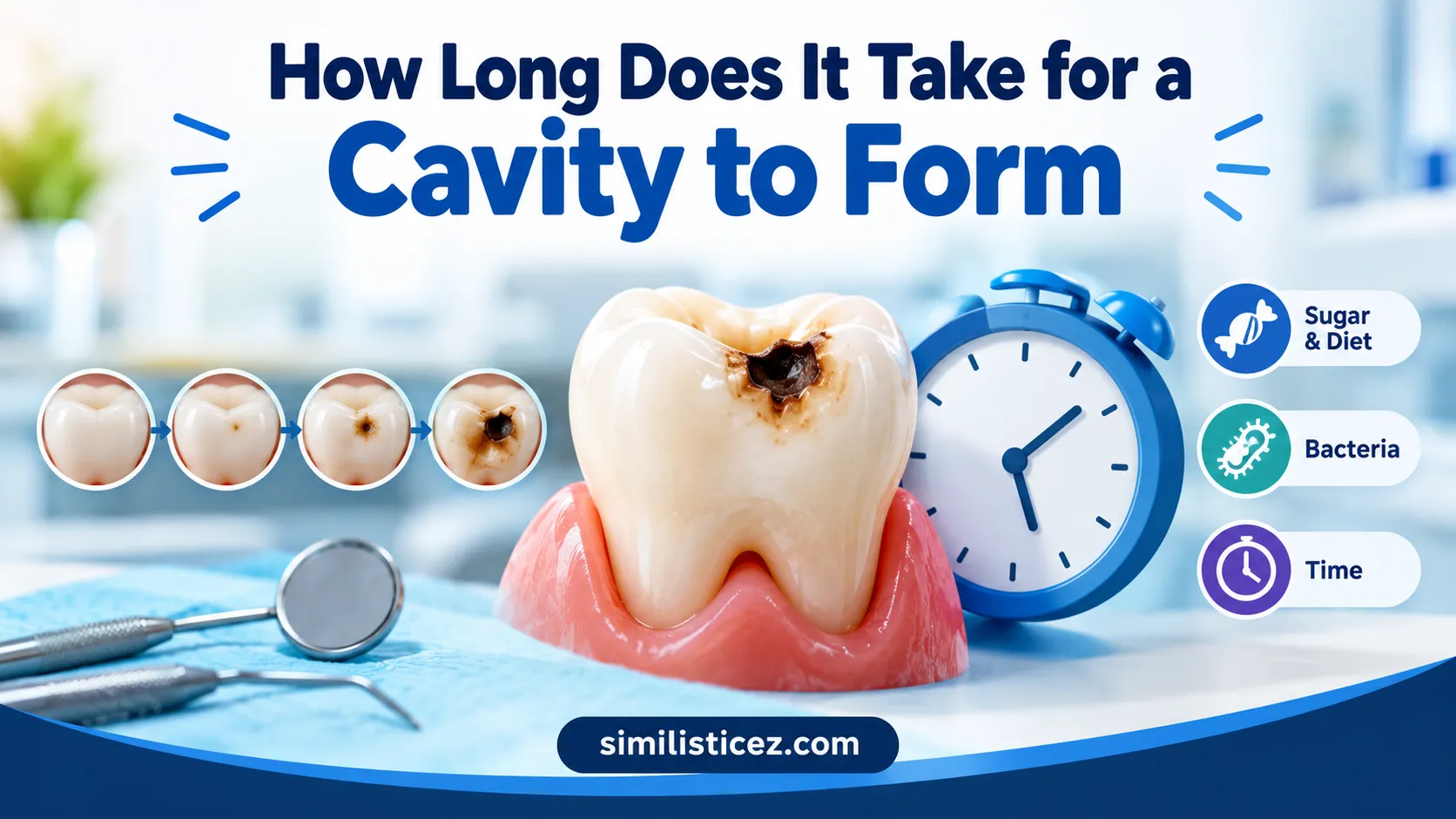
Have you ever noticed a tiny dark spot on your tooth and wondered how long it took to get there? If you’re asking how long does it take for a cavity to form, there isn’t one exact answer that applies to everyone.
Tooth decay usually develops gradually, starting with mineral loss in the enamel before a true hole forms.
How quickly this process moves can depend on things like your diet, oral hygiene, fluoride exposure, saliva, and overall risk of tooth decay.
Sometimes, early tooth decay can be stopped or even reversed before it becomes a cavity. However, once a permanent hole develops, the damaged tooth structure generally cannot repair itself.
That’s why understanding the stages of tooth decay can help you recognize potential problems early.
In this guide, we’ll explain how cavities develop, whether one can form in a week or month, what can speed up the process, and how to protect your teeth.
How Does a Cavity Form?
A cavity doesn’t appear suddenly. It develops through a series of changes that begin with plaque and bacteria on the surface of a tooth. Understanding this process makes it easier to see why there isn’t a fixed cavity formation timeline.
1. Plaque Builds Up
Plaque is a sticky film that naturally forms on your teeth. It contains bacteria that can use sugars and starches left behind after eating and drinking.
When plaque isn’t removed regularly, these bacteria can create an environment that promotes tooth decay.
2. Acids Attack the Enamel
After bacteria break down sugars and starches, they produce acids. These acids can temporarily lower the pH around the tooth and cause minerals to leave the enamel.
Repeated acid attacks can gradually weaken the tooth’s protective outer layer.
3. Minerals Are Lost
This process is called demineralization. At this stage, the tooth may develop an early white spot, but there may not yet be a physical hole.
Saliva and fluoride can help replace lost minerals and strengthen enamel, which is why early tooth decay may sometimes be stopped or reversed.
4. Enamel Continues to Break Down
If mineral loss continues faster than the tooth can recover, the enamel can become increasingly weakened. Eventually, its structure may break down.
Once the enamel has physically collapsed, the damage is no longer simply an early mineral-loss problem.
5. A Cavity Develops
A cavity is a permanent damaged area or hole in the tooth caused by tooth decay. At this point, the tooth cannot simply grow the missing structure back on its own, and a dentist may need to treat it.
The entire process can happen at different rates depending on individual risk factors, so seeing a cavity today doesn’t necessarily mean it formed recently.
The Stages of Tooth Decay
Understanding the stages of tooth decay can help explain why a cavity does not have one predictable formation timeline. Decay generally progresses from early mineral changes to more significant damage when the underlying causes are not addressed.
Stage 1: Plaque Buildup
The process starts when plaque containing bacteria accumulates on the teeth. When you frequently consume sugars and starches, these bacteria can produce acids that attack tooth enamel.
Stage 2: Mineral Loss
Repeated acid exposure can cause minerals to leave the enamel. This early stage is known as demineralization. You may notice a white or chalky area, although there may be no pain.
Stage 3: Early Tooth Decay
At this point, the enamel has experienced mineral loss, but a permanent hole may not have formed. Improving oral hygiene and maintaining adequate fluoride exposure can help protect the enamel and may allow early lesions to remineralize.
Stage 4: Enamel Breakdown
If the decay continues, the enamel can weaken enough to break down. Once there is a physical loss of tooth structure, the damage is more difficult to reverse.
Stage 5: A Cavity Forms
Eventually, continued decay can create a permanent hole in the tooth. This is what most people mean when they say they have a cavity.
Stage 6: Decay Moves Deeper
If an established cavity remains untreated, decay can progress farther into the tooth. This may eventually cause increased sensitivity or pain and require more extensive dental treatment.
The important point is that early tooth decay and an established cavity are not the same thing. Early mineral loss may sometimes be managed before a hole develops, while a formed cavity generally requires professional dental care.
What Slows Down Cavity Formation?
Although you cannot control every factor that affects tooth decay, several everyday habits can help slow the process and reduce your risk of developing cavities. The goal is to limit acid attacks while giving your teeth opportunities to recover.
Brush With Fluoride Toothpaste
Brushing twice a day with fluoride toothpaste helps remove plaque and provides fluoride that strengthens enamel. Brush all tooth surfaces carefully, especially areas where plaque tends to collect.
Clean Between Your Teeth
Brushing alone may not effectively clean every space between teeth. Floss or use another interdental cleaning method recommended by your dental professional to help remove plaque and food from these areas.
Reduce Frequent Sugar Exposure
You don’t necessarily need to eliminate every sweet food. However, frequently eating or drinking sugary items can give bacteria more opportunities to produce acids. Limiting how often your teeth are exposed to sugar can help.
Drink Water
Water can help rinse away food particles and support normal saliva function. Choosing water instead of frequently sipping sugary beverages can also reduce repeated acid exposure.
Maintain Healthy Saliva Flow
Saliva naturally helps protect teeth by clearing food, buffering acids, and supplying minerals. If you regularly experience a dry mouth, mention it to your dentist because the underlying cause may need attention.
Keep Regular Dental Appointments
Professional examinations can identify early tooth decay before it becomes a larger problem. Your dentist can also determine whether you could benefit from additional fluoride treatments or dental sealants.
These habits don’t guarantee that a cavity will never develop, but they can help create conditions that make tooth decay less likely to progress.
How to Prevent a Cavity From Forming
While no prevention method guarantees that you will never develop a cavity, consistent oral care can significantly reduce the conditions that allow tooth decay to progress. The goal is to remove plaque, strengthen enamel, and reduce frequent acid attacks.
Brush Twice a Day With Fluoride Toothpaste
Brush your teeth twice daily using fluoride toothpaste. Fluoride helps strengthen enamel and supports the remineralization process after acid attacks.
Clean Between Your Teeth
Plaque can remain between teeth where a toothbrush may not reach effectively. Flossing or another appropriate interdental cleaning method can help remove plaque from these areas.
Limit Frequent Sugary Foods and Drinks
Bacteria use sugars and starches to produce acids that can contribute to enamel mineral loss. Reducing how frequently your teeth are exposed to sugary foods and drinks can help lower repeated acid attacks.
Choose Water More Often
Drinking water instead of frequently consuming sugary beverages can reduce sugar exposure. Water can also help wash away food particles and support normal saliva function.
Keep Up With Dental Checkups
Regular dental examinations allow a professional to look for early changes that you may not notice yourself. Your dentist can also recommend preventive treatments based on your individual risk.
Ask About Fluoride and Sealants
Depending on your cavity risk, a dentist may recommend additional fluoride treatment or dental sealants to protect vulnerable tooth surfaces.
Good daily habits are particularly valuable because preventing or stopping early tooth decay is easier than repairing a cavity after permanent tooth structure has been lost.
How Long Does It Take for a Cavity to Get Worse?
There is no fixed amount of time for a cavity to become larger or more serious. Cavity progression varies from person to person, and the rate can depend on factors such as oral hygiene, diet, fluoride exposure, saliva, and the location and extent of the existing decay.
A small cavity may remain relatively stable for some time in one person while progressing more quickly in another. This is why it isn’t possible to determine the age or progression of a cavity simply by looking at it.
What Can Make a Cavity Progress?
An established cavity may continue to worsen when the conditions that caused the decay remain present. Frequent sugar exposure, plaque buildup, inadequate fluoride, and reduced saliva can all contribute to a higher risk of continued tooth decay.
Can a Cavity Suddenly Get Worse?
You might suddenly notice pain or sensitivity, but that doesn’t necessarily mean the cavity suddenly formed or dramatically increased in size. Symptoms can become noticeable after decay has already been developing.
Why Early Treatment Matters
Once a permanent cavity has formed, the damaged tooth structure generally cannot rebuild itself naturally. Having a suspicious area examined sooner allows a dentist to determine its condition and recommend appropriate treatment.
So, rather than trying to estimate how many days a cavity has left before it gets worse, it’s better to have it evaluated and address the underlying risk factors early.
Can a Cavity Stop Getting Worse on Its Own?
In some cases, early tooth decay can be stopped or reversed, but an established cavity is different. The key is whether the tooth has experienced mineral loss only or whether a permanent hole has already developed.
Early Tooth Decay May Be Stopped
When decay is still in its early stage, the enamel may have lost minerals without developing a physical cavity. Saliva and fluoride can help replace minerals and strengthen the enamel. Improving oral hygiene and reducing frequent sugar exposure can also create conditions that favor remineralization.
An Established Cavity Usually Won’t Repair Itself
Once decay has created a permanent hole or caused a significant loss of tooth structure, the missing structure cannot naturally grow back. Professional dental treatment may be necessary to restore the tooth and prevent further damage.
Don’t Rely on Symptoms Alone
A cavity can sometimes stop progressing under favorable conditions, but you shouldn’t assume that a dark spot, rough area, or suspected cavity has healed simply because it no longer hurts. Symptoms aren’t a reliable measure of whether decay is active.
If you suspect you have a cavity, a dentist can determine its stage and whether preventive care or restorative treatment is appropriate. The earlier a problem is identified, the more options there may be for managing it.
When Should You See a Dentist?
If you suspect you have a cavity, you don’t need to wait until the tooth becomes painful. Early tooth decay may not cause noticeable symptoms, so a dental examination can identify problems before they become more extensive.
Consider arranging a dental appointment if you notice:
- A visible hole or pit in a tooth
- White, brown, gray, or dark areas that seem unusual
- New or persistent tooth sensitivity
- Pain when eating or drinking
- Food repeatedly getting trapped around one tooth
- A rough or damaged area on the tooth
- Tooth pain that continues or becomes worse
- Swelling around a tooth or gum
It’s also important to remember that these symptoms don’t automatically mean you have a cavity. Tooth sensitivity, discoloration, and pain can have several possible causes.
If you experience significant swelling, severe dental pain, fever, or difficulty swallowing or breathing, seek prompt professional dental or medical care.
Routine dental visits are useful even when your teeth feel fine because dentists can detect some areas of decay before they become noticeable to you.
FAQs:
How long does it take for a cavity to form?
There is no fixed timeline. Tooth decay develops gradually, and the speed depends on factors such as plaque, diet, fluoride exposure, saliva, and individual cavity risk.
Can a cavity form in a week?
A complete cavity should not be assumed to develop from nothing in just one week. However, early tooth decay can continue progressing during that time if the conditions causing mineral loss remain.
Can a cavity form in a month?
A month is not a reliable timeframe for cavity formation. Some decay may progress during that period, while in other cases the process can take considerably longer. Each person’s risk and circumstances are different.
Can a cavity form overnight?
An established cavity generally does not develop overnight. You may simply notice an existing problem suddenly because symptoms or visible changes have become more noticeable.
Can early tooth decay be reversed?
Early mineral loss may sometimes be stopped or reversed through remineralization, particularly with appropriate fluoride exposure and improved oral care. Once a permanent cavity has formed, the lost tooth structure cannot naturally grow back.
Can you have a cavity without pain?
Yes. Tooth decay can exist without noticeable pain, particularly during its earlier stages. That’s one reason regular dental examinations are important.
How fast can a cavity get worse?
There is no universal rate. Progression depends on factors including diet, oral hygiene, fluoride, saliva, and the location and extent of the decay.
How can you stop a cavity from getting worse?
If it is early tooth decay, improving oral hygiene, using fluoride toothpaste, reducing frequent sugar exposure, and following dental advice may help prevent progression. An established cavity should be evaluated by a dentist.
Conclusion:
So, how long does it take for a cavity to form? There is no exact timeline that applies to everyone. Tooth decay usually develops gradually, beginning with mineral loss before progressing to a permanent cavity.
Factors such as frequent sugar exposure, plaque buildup, fluoride, saliva, and oral-care habits can influence how quickly decay progresses.
The good news is that early tooth decay may sometimes be stopped or reversed before a hole forms. Once an established cavity develops, however, the damaged tooth structure generally cannot repair itself naturally.
If you notice sensitivity, discoloration, a rough spot, or a visible hole, don’t rely on the amount of time you’ve noticed it to judge how serious it is. A dentist can determine whether decay is present and how advanced it may be.