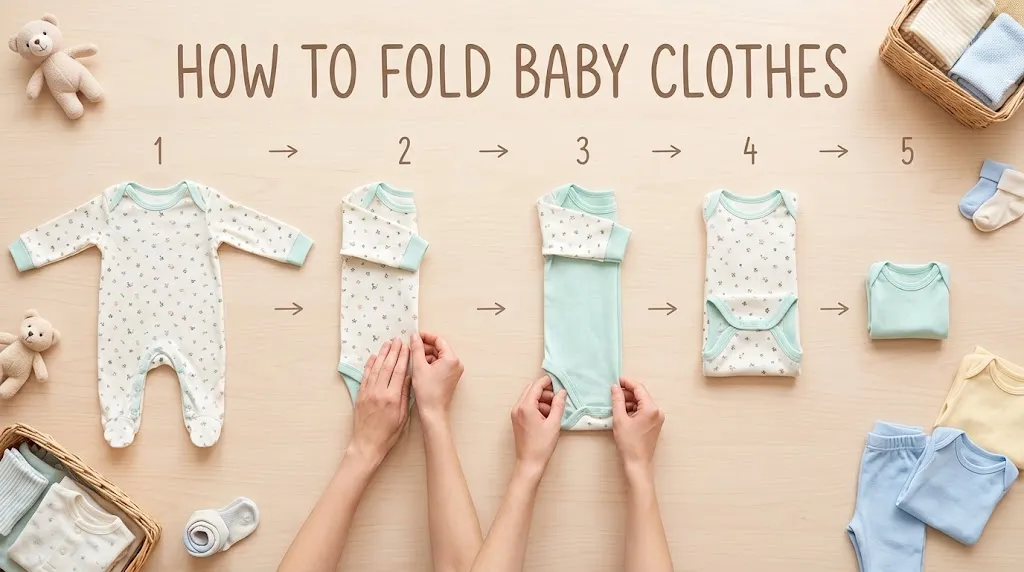
When I first started organizing baby clothes, I was surprised by how quickly those tiny onesies, socks, shirts, and pants could turn a neat drawer into a messy pile. Baby clothes may be small, but there can be a lot of them.
Learning how to fold baby clothes properly can make everyday dressing, laundry, and nursery organization much easier.
The good news is that you do not need complicated techniques or expensive storage products.
With a few simple folding methods, you can keep different types of baby clothes neat while making better use of your drawer and closet space.
You can also organize clothes by size, season, clothing type, or how often your baby wears them.
In this guide, I’ll walk you through easy ways to fold onesies, shirts, pants, pajamas, dresses, socks, and other baby essentials.
You’ll also discover practical space-saving and organization tips that make keeping baby clothes tidy much simpler.
Why Learning How to Fold Baby Clothes Matters
Baby clothes are tiny, but they can quickly take over a drawer or dresser. Between onesies, pajamas, socks, pants, and seasonal outfits, it is easy for everything to become mixed together. A simple folding routine can make your baby’s clothes much easier to manage.
Learning how to fold baby clothes also helps you use your available storage space more efficiently. Neatly folded clothes can fit into drawers, baskets, and shelves without creating unnecessary piles. When each item has a place, you can find what you need without searching through the entire drawer.
Another benefit is easier daily dressing. Keeping clothes organized by type or size lets you quickly grab a clean outfit when your baby needs one. You can also separate frequently used clothes from special outfits or clothes your baby has not grown into yet.
Most importantly, a good folding system does not have to be complicated. The best method is one that keeps clothes visible, accessible, and easy to put away after laundry.
What You Need Before Folding Baby Clothes
Before you start folding, take a few minutes to prepare your clothes and storage area. A little preparation can make the process faster and help you keep everything organized afterward.
Clean, Flat Folding Surface
Choose a clean, dry, and reasonably flat surface, such as a changing table, dresser, or clean bed. Having enough space makes it easier to lay each garment flat and create even folds.
Clean and Dry Baby Clothes
Make sure clothes are completely clean and dry before folding them. Check that there are no damp areas, especially around thicker seams, waistbands, or cuffs.
Storage Drawers or Baskets
Decide where each type of clothing will go before you begin. Drawers work well for everyday clothes, while baskets can be useful for socks, bibs, burp cloths, and other small items.
Drawer Dividers and Organizers
Small dividers can prevent tiny clothes from becoming mixed together. You can use separate sections for onesies, pants, socks, pajamas, and other essentials.
Labels for Different Sizes
If you have several clothing sizes, labels can make finding the right items much easier. Consider separating newborn, 0–3 months, 3–6 months, and larger sizes.
Once everything is ready, you can start folding each garment using a simple method that keeps it compact without making the clothes difficult to access.
How to Fold Baby Clothes Step by Step
Once your clothes and storage area are ready, you can start with a basic folding method that works for many everyday baby garments. The goal is to create a compact shape that fits easily into a drawer while keeping each item easy to identify.
Step 1: Lay the Clothing Flat
Place the baby garment on a clean, flat surface. Smooth out wrinkles with your hands so the fabric lies evenly. This gives you a better starting point for making neat folds.
Step 2: Fasten Buttons or Snaps
If the garment has buttons, snaps, or a zipper, fasten them when practical. This helps the clothing maintain its shape while you fold and store it.
Step 3: Fold the Sleeves or Sides In
Bring the sleeves toward the center of the garment. For sleeveless clothes, fold the sides inward so the garment becomes a narrow rectangle.
Step 4: Fold From Bottom to Top
Take the bottom portion and fold it upward toward the middle. For very small clothes, you may only need one fold to create a compact shape.
Step 5: Make the Final Fold
Fold the garment again if necessary until it reaches a size that fits comfortably in your drawer or storage basket. Avoid making the fold so tight that it becomes difficult to unfold.
Step 6: Store Vertically or Stack Neatly
Place folded clothes vertically when you want to see individual items at a glance, or stack them when that works better for your storage space. Keep similar garments together so you can find them quickly.
This simple process can be adjusted depending on the size and style of the garment. Next, you can apply the same basic principles specifically to baby onesies, one of the most frequently used items in a baby’s wardrobe.
How to Fold Baby Onesies
Baby onesies are among the clothes parents use most often, so keeping them neatly folded can make everyday dressing much easier. Because onesies have snaps at the bottom, a simple fold can turn them into compact packages that fit well in drawers.
Basic Onesie Folding Method
Start by laying the onesie flat with the front facing up. Smooth the fabric with your hands and fasten the bottom snaps if needed.
Next, fold both sleeves inward toward the center. Then bring each side of the onesie toward the middle to create a narrow rectangle. Fold the bottom section upward, followed by another fold if needed, until the onesie reaches a convenient size for your drawer.
How to Fold Short-Sleeve Onesies
Short-sleeve onesies are usually quick to fold because their sleeves take up less space. Fold each sleeve inward, bring the sides toward the center, and then fold the bottom upward.
How to Fold Long-Sleeve Onesies
For long-sleeve onesies, first straighten the sleeves before folding them inward. Make sure the sleeves are tucked neatly inside the main body so they do not stick out or create bulky areas.
How to Fold Snap-Crotch Bodysuits
Fasten the snaps before folding when practical. This keeps the lower section together and helps prevent the bodysuit from unfolding inside the drawer.
For everyday use, consider keeping the most frequently worn onesies at the front or top of the drawer. You can also organize them by size so you can quickly find the right fit as your baby grows.
How to Fold Baby Shirts and T-Shirts
Baby shirts and T-shirts are simple to fold, but their small size can make them easy to mix together in a drawer. A consistent folding method keeps them compact and makes it easier to organize different sizes.
Lay the Shirt Flat
Place the shirt on a clean, flat surface with the front facing down or up. Smooth the fabric and straighten the neckline and hem.
Fold the Sleeves Inward
Bring one sleeve toward the center of the shirt, keeping the fold as straight as possible. Repeat on the other side so both sleeves sit neatly inside the main body.
Fold Both Sides Toward the Center
Fold the left side toward the middle, followed by the right side. The shirt should now form a long, narrow rectangle.
Fold the Bottom Up
Take the bottom edge of the shirt and fold it upward toward the middle. Depending on the size of the shirt and your storage space, make one or two additional folds.
Make a Compact Final Fold
Finish with a compact rectangle that can sit neatly in a drawer or storage basket. Avoid making the fold unnecessarily tight, especially with delicate fabrics.
For easier organization, keep shirts together by size or type. You can place frequently worn shirts in an easy-to-reach section and move larger sizes to a separate area until your baby grows into them.
How to Fold Baby Pants
Baby pants are usually easy to fold because they have a simple shape, but their small size can make them difficult to organize when several pairs are stored together. A consistent folding method helps keep pants compact and makes different sizes easier to find.
Fold the Pants in Half
Lay the pants flat and smooth out the fabric. Place one leg directly over the other, aligning the waistband, cuffs, and seams as closely as possible.
Align the Legs
Check that both legs are straight and not twisted. If the pants have pockets, buttons, or decorative details, smooth them down before continuing.
Fold the Legs Upward
Starting from the bottom cuffs, fold the legs upward toward the waistband. For smaller pants, one fold may be enough. Larger pairs may need another fold to fit your storage space.
Create a Compact Rectangle
Finish by folding the pants into a compact rectangle. The finished size should fit comfortably in your drawer without making the stack too bulky.
You can organize baby pants by size, style, or frequency of use. Keep leggings and lightweight everyday pants together, while thicker jeans or seasonal trousers can be stored separately. If you use vertical storage, place each folded pair next to the others so you can see the options without disturbing the entire drawer.
How to Fold Baby Pajamas
Baby pajamas can take up more space than onesies or T-shirts, especially when they are made from thicker fabric or have long sleeves and legs. Folding them consistently helps keep sleepwear organized and makes nighttime changes easier.
Two-Piece Pajama Sets
Start by laying the pajama top flat and folding it using the same method as a baby shirt. Fold the sleeves inward, bring the sides toward the center, and fold the bottom upward.
Next, fold the pajama pants in half with the legs aligned. Fold them upward into a compact rectangle.
To keep the set together, place the folded pants on top of the folded shirt or store both pieces side by side in the same drawer section. This makes complete outfits easier to find.
Footed Pajamas
Lay the footed pajamas flat and straighten the sleeves and legs. Fold both sleeves toward the center, then bring the sides inward.
Next, fold the lower section upward toward the upper portion. Depending on the size, you can make one or two folds until the pajamas fit comfortably in your drawer.
Zippered Baby Sleepers
Close the zipper before folding if practical. Lay the sleeper flat, fold the sleeves inward, and bring the sides toward the center.
Fold the legs upward toward the body to create a compact shape. Avoid making the folds excessively tight, particularly with thicker fabrics.
For easy access, keep pajamas in a dedicated drawer section and organize them by size. Placing the currently used size where it is easiest to reach can also make bedtime routines simpler.
How to Fold Baby Dresses
Baby dresses often have extra fabric, ruffles, bows, or decorative details, so they need a little more care when folding. The goal is to keep the dress compact while avoiding unnecessary creases or crushing delicate decorations.
Lay the Dress Flat
Place the dress on a clean, flat surface and gently smooth the fabric. Straighten the skirt, sleeves, straps, and neckline before folding.
Fold the Sleeves or Straps
For a dress with sleeves, fold them inward toward the center. If it has thin straps, carefully position them over the main body so they do not become tangled or twisted.
Fold the Skirt Section Carefully
Bring the sides of the dress inward to create a narrower shape. Then fold the lower skirt upward toward the bodice. Depending on the dress length and storage space, you may need one additional fold.
Store Dresses Without Crushing Details
Avoid placing heavy piles on top of dresses with bows, ruffles, appliqués, or other decorations. If a dress has particularly delicate details, consider hanging it or placing it near the top of a drawer or storage section.
For everyday dresses, organize them by size and season. Keeping special-occasion dresses separate can also prevent them from getting buried among frequently worn baby clothes.
How to Fold Baby Sweaters and Jackets
Baby sweaters, hoodies, cardigans, and jackets are bulkier than everyday shirts and onesies. Folding them properly can help prevent unnecessary wrinkles while making better use of your storage space.
Lightweight Sweaters
Lay the sweater flat and smooth the fabric. Fold the sleeves inward across the back, then fold both sides toward the center. Finish by folding the bottom upward until the sweater reaches a comfortable storage size.
Hoodies
Place the hoodie flat with the hood straightened. Fold the sleeves inward and bring the sides toward the center. You can fold the hood down toward the body before making the final fold.
Avoid stuffing the hood inside the sweater if doing so creates a bulky lump. A flatter fold will usually make storage easier.
Cardigans
Button or zip the cardigan if appropriate, then lay it flat. Fold the sleeves inward and bring the sides toward the center. Fold the bottom upward once or twice depending on its size.
Baby Jackets
For lightweight jackets, use a similar folding method and avoid compressing them too tightly. Thicker jackets may be better stored on a shelf, in a larger basket, or on a hanger if your storage space allows.
Because bulky baby clothing takes up more room, consider keeping seasonal sweaters and jackets separate from the clothes your baby wears every day. This leaves your main drawers less crowded and makes frequently used items easier to access.
How to Fold Baby Socks and Small Accessories
Small baby accessories can easily disappear at the bottom of a drawer. Socks, mittens, hats, bibs, and burp cloths are much easier to manage when they have their own designated sections.
Folding Baby Socks
Start by pairing each set of socks together. Place one sock over the other and fold them gently into a compact bundle. Avoid stretching the elastic tightly around the socks, as this can put unnecessary strain on the fabric.
Folding Baby Mittens
Lay the mittens together and place one inside the other if they are designed as a pair. Fold them once and store them in a small drawer compartment or basket.
Folding Baby Hats
Flatten soft baby hats and fold them gently in half. For larger or structured hats, avoid creating sharp folds that could affect their shape.
Organizing Bibs
Fasten snap or Velcro bibs before folding when appropriate. Fold larger bibs in half and store them together in a dedicated section.
Organizing Burp Cloths
Lay each burp cloth flat, fold it in half, and then fold it again into a manageable rectangle. Stack them together or place them vertically in a drawer organizer.
Because these items are small, keeping them in separate compartments can make a noticeable difference. Instead of searching through a large drawer, you can quickly grab the exact accessory you need.
How to Organize Folded Baby Clothes
Folding baby clothes is only half the job. Once everything is folded, organizing the clothes in a logical way can make your drawers easier to use and prevent them from becoming messy again.
Organize by Clothing Type
Start by keeping similar garments together. Create separate sections for onesies, shirts, pants, pajamas, and other everyday clothing. This makes it easier to find a specific item without searching through the entire drawer.
Organize by Baby’s Age or Size
Baby clothes often come in several size ranges, so mixing them together can create unnecessary confusion. Separate clothes by their labeled sizes and move larger sizes to a different drawer or section until they are needed.
Organize by Season
Keep lightweight summer clothing separate from warmer sweaters, jackets, and winter outfits. Store seasonal items that are not currently needed in a less accessible area to free up everyday storage space.
Create a Separate Everyday Clothing Section
Keep the clothes your baby wears regularly in the most convenient location. Onesies, comfortable pants, shirts, and pajamas can be placed where they are easy to reach during busy routines.
Keep Special-Occasion Clothes Separate
Dressier outfits, formal dresses, or clothing reserved for special occasions do not need to take up valuable everyday drawer space. Store these separately so they stay organized and are easy to locate when needed.
A simple system based on type, size, season, and frequency of use can make a big difference. As your baby’s wardrobe changes, adjust the organization rather than trying to keep the original arrangement forever.
How to Organize Baby Clothes in a Small Drawer
A small drawer can still hold plenty of baby clothes when you use the available space carefully. Since baby garments are compact, a few simple organization techniques can help you fit more items without turning the drawer into a crowded pile.
Use Drawer Dividers
Divide the drawer into sections for different types of clothing. One section can hold onesies, another can hold pants, while smaller compartments can be used for socks, bibs, or mittens.
Fold Clothes Into Compact Rectangles
Use consistent folds so each garment takes up a similar amount of space. Avoid oversized or uneven folds because they can leave unused gaps inside the drawer.
Store Clothes Vertically
Vertical storage can make individual garments easier to see. Instead of placing several layers on top of each other, position folded clothes next to one another so you can select an item without disturbing the rest.
Use Small Bins for Accessories
Tiny items can quickly become difficult to find. Small containers or organizers can keep socks, hats, mittens, and other accessories together while preventing them from spreading across the drawer.
Keep Larger Items Outside the Main Drawer
Bulky sweaters, jackets, blankets, and seasonal clothing can consume a large amount of drawer space. Consider storing these items separately on a shelf, in a basket, or in another suitable storage area.
The key is to make every section of the drawer serve a purpose. When clothing is grouped logically and each item has a designated place, even a small drawer can remain practical and easy to maintain.
How to Organize Baby Clothes in a Nursery Dresser
A nursery dresser can make baby clothes much easier to manage when each drawer has a clear purpose. Rather than putting everything wherever there is space, organize garments according to how often they are used, their type, and their size.
Top Drawer: Everyday Essentials
The top drawer is convenient for clothes and accessories you reach for frequently. You can keep onesies, socks, bibs, and other small everyday items here. Use dividers to keep these smaller garments from becoming mixed together.
Middle Drawer: Everyday Outfits
Use a middle drawer for shirts, pants, leggings, and complete everyday outfits. Group similar items together so you can quickly choose clothing when getting your baby dressed.
Lower Drawer: Pajamas and Larger Clothing
Pajamas, sweaters, seasonal clothes, and other less frequently used garments can go in a lower drawer. If these items are bulky, avoid packing them too tightly.
Separate Clothes by Size
Within each drawer, keep clothing sizes organized rather than mixing everything together. For example, current-size clothes can stay in the easiest-to-reach section, while larger sizes can be stored separately until they are needed.
Adjust the System as Your Baby Grows
Your baby’s clothing needs will change over time. When one size is no longer being used, move those clothes out and bring the next size forward. This simple rotation can prevent drawers from becoming overcrowded.
The exact drawer arrangement does not have to follow a strict rule. Choose a system that matches your nursery, available storage, and daily routine, then keep it consistent.
Folding vs. Rolling Baby Clothes
When organizing baby clothes, you may wonder whether folding or rolling is the better option. Both methods can work, but the right choice depends on the type of garment, available storage space, and how easily you want to access each item.
| Method | Space Use | Visibility | Best For |
| Folding | Efficient | Good | Most everyday clothes |
| Rolling | Efficient for some items | Excellent | Small, flexible garments |
| Vertical Folding | Very efficient | Excellent | Drawers and organizers |
| Hanging | Uses closet space | Excellent | Dresses and some delicate garments |
Traditional Folding
Traditional folding works well for shirts, onesies, pants, pajamas, and many other baby garments. It creates neat shapes that can be stacked or placed vertically in a drawer.
Rolling
Rolling can be useful for lightweight, flexible clothing, particularly when packing for travel. Rolled garments can also make individual items easy to identify in some storage setups.
Vertical Folding
Vertical folding places garments next to one another rather than underneath one another. This can make more of your baby’s clothes visible and reduce the need to disturb a whole stack when looking for one item.
Hanging
Some dresses, jackets, and delicate garments may be better suited to hanging, especially when they are bulky or have details that you do not want compressed.
Ultimately, you do not have to choose just one method. You can fold everyday clothes, roll selected items for travel, use vertical storage for drawers, and hang garments that benefit from being kept on a hanger.
How to Keep Baby Clothes Organized After Folding
Once you have learned how to fold baby clothes, the next challenge is keeping everything organized. A simple routine can prevent clean clothes from quickly turning into another messy drawer.
Return Clothes to the Same Location
Give every type of clothing a regular place. If onesies always go in one section and pants in another, putting laundry away becomes faster and more predictable.
Use Labels
Labels can be especially helpful when you have several sizes or storage containers. Mark sections by clothing type, size, or season so you can quickly identify what is inside.
Rotate Seasonal Clothes
Move clothing according to the season. Lightweight outfits can take priority during warmer months, while sweaters and warmer pajamas can be brought forward when the weather gets cooler.
Remove Clothes That No Longer Fit
Babies can outgrow clothes surprisingly quickly. Regularly check drawers and remove items that are too small. You can place them in a separate storage box if you plan to save them, or choose another appropriate option for clothes you no longer need.
Keep Laundry and Clean Clothes Separate
Put clean, completely dry clothes away promptly rather than mixing them with laundry that still needs attHow to Organize Baby Clothes by Size
Baby clothes often come in several size ranges, and keeping them separated can make dressing much easier. Instead of mixing every size together, create clear sections so you know which clothes are ready to wear and which ones can be saved for later.
Newborn
Keep newborn-sized clothes together in an easily accessible section if your baby is currently wearing them. Since these garments may only be used for a limited period, avoid filling the main drawer with too many pieces.
0–3 Months
Create a separate section for 0–3-month clothing. Onesies, shirts, pants, and pajamas can each have their own small area within this size range.
3–6 Months
Store the next size separately rather than mixing it with the current wardrobe. When your baby begins moving into this size, you can bring these clothes forward.
6–9 Months
Keep 6–9-month clothing together in a labeled drawer, basket, or storage section. This makes it easier to prepare the next stage of your baby’s wardrobe.
9–12 Months
Larger baby clothes can be stored separately until they are needed. If your storage space is limited, consider using a labeled container for future sizes.
Larger Sizes
Clothes that are several sizes ahead do not need to occupy prime drawer space. Store them in clearly labeled containers or another suitable location until your baby is closer to that size.
Remember that clothing labels are not always a perfect guide to fit. Garment sizing can vary between brands, so pay attention to how individual pieces fit your baby.
As your baby grows, rotate the wardrobe: move the current size into the easiest-to-reach area, place the next size nearby, and set aside clothes that are no longer needed.
Reorganize as Your Baby Grows
Your storage system will naturally need to change as your baby moves through different sizes. Every few weeks or whenever the drawers become difficult to use, take a few minutes to adjust the sections.
A good organization system should make daily life easier. If putting clothes away starts feeling complicated, simplify the categories and keep only the sections you actually use.
How to Organize Baby Clothes by Size
Baby clothes often come in several size ranges, and keeping them separated can make dressing much easier. Instead of mixing every size together, create clear sections so you know which clothes are ready to wear and which ones can be saved for later.
Newborn
Keep newborn-sized clothes together in an easily accessible section if your baby is currently wearing them. Since these garments may only be used for a limited period, avoid filling the main drawer with too many pieces.
0–3 Months
Create a separate section for 0–3-month clothing. Onesies, shirts, pants, and pajamas can each have their own small area within this size range.
3–6 Months
Store the next size separately rather than mixing it with the current wardrobe. When your baby begins moving into this size, you can bring these clothes forward.
6–9 Months
Keep 6–9-month clothing together in a labeled drawer, basket, or storage section. This makes it easier to prepare the next stage of your baby’s wardrobe.
9–12 Months
Larger baby clothes can be stored separately until they are needed. If your storage space is limited, consider using a labeled container for future sizes.
Larger Sizes
Clothes that are several sizes ahead do not need to occupy prime drawer space. Store them in clearly labeled containers or another suitable location until your baby is closer to that size.
Remember that clothing labels are not always a perfect guide to fit. Garment sizing can vary between brands, so pay attention to how individual pieces fit your baby.
As your baby grows, rotate the wardrobe: move the current size into the easiest-to-reach area, place the next size nearby, and set aside clothes that are no longer needed.
How to Fold Baby Clothes for Travel
Packing baby clothes for a trip can be challenging because you need several changes of clothing without filling your entire bag. A simple folding and organizing system can help you use your luggage space efficiently while keeping outfits easy to find.
Choose the Clothes First
Before folding, decide how many outfits you actually need. Consider the length of the trip, weather, planned activities, and the possibility of needing an extra change.
Fold Complete Outfits Together
Pair items that belong to the same outfit when practical. For example, you can keep a shirt and matching pants together so you do not have to search through the entire bag when your baby needs a change.
Use Compact Folds
Fold onesies, shirts, pants, and pajamas into compact shapes that fit comfortably inside your luggage. Avoid creating unnecessarily large folds that leave empty spaces between garments.
Separate Socks and Small Accessories
Place socks, bibs, hats, and other small items in a separate pouch or compartment. This keeps them from getting lost among larger clothes.
Use Packing Cubes or Small Bags
Packing cubes or separate fabric organizers can divide clothing by outfit, size, or purpose. They can also make it easier to remove one group of clothes without disturbing the rest of your luggage.
Keep an Emergency Outfit Accessible
Place at least one spare outfit somewhere easy to reach rather than at the bottom of your luggage. This can save time when you need a quick change during travel.
For longer trips, you can also organize clothes by day or activity. The goal is to make each outfit easy to locate while keeping the rest of the baby’s clothing neatly contained.
Common Baby Clothes Folding Mistakes to Avoid
Even a simple folding routine can become frustrating if clothes are stored in a way that makes them difficult to find or use. Avoiding a few common mistakes can help your baby’s drawers stay neat for longer.
Overstuffing Drawers
Packing too many clothes into one drawer can make it difficult to remove individual items. Leave enough room for clothes to be taken out and put back without disturbing everything around them.
Mixing Different Sizes
Putting newborn, 0–3-month, and larger clothes together can make choosing an appropriate outfit unnecessarily difficult. Separate sizes into clearly defined sections.
Folding Damp Clothes
Never put clothes away while they are still damp. Make sure freshly washed garments are completely dry before folding and storing them.
Making Extremely Tight Folds
A very tight fold is not necessarily better. Excessive compression can make clothes harder to unfold and may create unnecessary creases. Aim for a compact but comfortable fold.
Hiding Frequently Used Clothes
If everyday onesies or pajamas are buried underneath several layers of clothing, getting dressed can become more time-consuming. Keep frequently used garments easy to access.
Mixing Accessories With Larger Clothes
Small socks, mittens, and bibs can easily disappear when mixed with shirts and pants. Give these items their own compartments or small containers.
Keeping Clothes That No Longer Fit
Outgrown clothes can quickly take up valuable storage space. Check your baby’s wardrobe regularly and move clothes that no longer fit into a separate storage area.
A good folding system should make your routine simpler. If a particular arrangement makes it difficult to find or put away clothes, adjust it until the system works naturally for your household.
Tips for Making Baby Clothes Easier to Find
Neatly folded baby clothes are helpful, but an organized system makes them even more practical. When every garment has a predictable place, you can find what you need quickly, especially during busy mornings or nighttime changes.
Keep Similar Garments Together
Create dedicated sections for onesies, shirts, pants, pajamas, and other clothing. This prevents different garments from becoming mixed together.
Store Clothes by Size
Separate clothing into size groups and clearly identify each section. Keep the size your baby currently wears in the easiest-to-reach location.
Use Drawer Dividers
Dividers can create small, defined spaces inside larger drawers. They are particularly useful for keeping tiny garments and accessories separated.
Label Storage Areas
If you have multiple drawers, baskets, or containers, simple labels can help you remember where each size or clothing type belongs.
Keep Complete Outfits Together
For clothes that are commonly worn as sets, consider storing the matching pieces together. This can make choosing an outfit faster.
Put Frequently Used Items at the Front
Everyday onesies, comfortable pants, and pajamas should be easy to reach. Less frequently used items can be placed farther back or in separate storage.
Maintain the Same System After Laundry
Try returning each garment to its designated section after washing. A consistent routine prevents clean clothes from gradually becoming one large mixed pile.
With a simple system, you spend less time searching through drawers and more time knowing exactly where each baby clothing item belongs.
How Often Should You Reorganize Baby Clothes?
Baby wardrobes change quickly, so even a well-organized drawer may need occasional attention. You do not need to completely reorganize everything every day. A quick check whenever your baby’s clothing needs change can usually keep the system manageable.
After a Major Size Change
When your baby moves into a new clothing size, bring the current size to the easiest-to-reach area and move smaller clothes aside.
When the Seasons Change
Review the wardrobe when warmer or cooler weather arrives. Move seasonal clothing into accessible storage and place items that are unlikely to be used soon elsewhere.
When Drawers Become Overcrowded
If you can no longer see or remove individual garments easily, it may be time to reorganize. Remove outgrown or rarely used items and refold the remaining clothes.
After Receiving New Baby Clothes
New clothes can quickly disrupt an organized drawer. Sort them by size and clothing type before putting them away rather than simply adding them to an existing pile.
When Certain Sizes Are No Longer Used
Regularly check whether your baby still fits into the clothes currently stored. Set aside anything that is too small and bring the next size forward when appropriate.
A short wardrobe check every few weeks can help, but there is no fixed schedule you must follow. The best time to reorganize is whenever the current system starts making clothes harder to find or store.
What to Do With Baby Clothes That No Longer Fit
Babies can move through clothing sizes quickly, leaving you with drawers full of clothes that are no longer being used. Instead of letting outgrown garments take up valuable storage space, sort them and decide what you want to do with each item.
Store Them for a Younger Sibling
If you may need the clothes again in the future, fold them neatly and place them in a clean, labeled storage container. Grouping them by size can make them easier to find later.
Donate Them
Clean, gently used baby clothes that are still in suitable condition can be donated to a local charity or community organization. Check their current guidelines before donating.
Give Them to Family or Friends
If someone you know is expecting a baby or has a younger child, you may choose to pass along clothes that are still useful.
Create a Keepsake Collection
Some baby outfits may have sentimental value. Instead of keeping every garment, choose a small selection of meaningful pieces and store them safely as keepsakes.
Recycle Unusable Clothing
Clothes that are heavily worn, damaged, or otherwise unsuitable for reuse may have textile-recycling options available in your area. Check local recycling guidance to see what materials are accepted.
Before storing, donating, or passing clothes along, sort everything by size and condition. This keeps your baby’s active wardrobe uncluttered and makes it easier to manage the clothes you decide to keep.
FAQs:
What is the best way to fold baby clothes?
The best method depends on the garment and your storage space. For most baby clothes, lay the item flat, fold the sleeves or sides inward, and fold the bottom upward into a compact shape. Vertical folding can make individual garments easier to see in a drawer.
How do you fold baby clothes to save space?
Use consistent, compact folds and avoid oversized stacks. Storing folded clothes vertically can also help you use drawer space efficiently while keeping individual items visible.
Is it better to roll or fold baby clothes?
Both methods can be useful. Folding works well for most everyday garments, while rolling can be convenient for lightweight clothes and travel. Choose the method that makes your storage easiest to use.
How do you organize baby clothes in a drawer?
Separate clothes by type and size. Keep onesies, shirts, pants, pajamas, and accessories in designated sections. Drawer dividers can help prevent smaller items from becoming mixed together.
How do you fold baby onesies?
Lay the onesie flat, straighten the fabric, fold the sleeves inward, bring the sides toward the center, and fold the bottom upward. Make one additional fold if needed to create a compact shape.
How do you keep baby clothes organized?
Give each clothing type and size a specific storage location. Keep frequently used clothes accessible, remove outgrown garments regularly, and return clean laundry to the same sections after washing.
How should baby clothes be organized by size?
Separate clothes into labeled size groups, such as newborn, 0–3 months, 3–6 months, and larger sizes. Keep the current size easiest to reach and store future sizes separately until they are needed.
Conclusion:
Learning how to fold baby clothes does not have to be complicated. A few simple techniques can keep onesies, shirts, pants, pajamas, and accessories neat while making better use of your available storage space.
The key is to choose a folding and organization system that works with your daily routine. Keep similar clothes together, separate different sizes, and make frequently used items easy to reach.
As your baby grows, remember to update the wardrobe regularly. Moving outgrown and seasonal clothes aside can prevent drawers from becoming overcrowded.
With a consistent routine, folding laundry becomes quicker and finding the right outfit becomes much easier. The goal is simple: fold neatly, organize practically, and keep baby clothes easy to find.

Hi, I’m Ethan Caldwell. I enjoy writing simple and creative similes. I help readers express feelings like love and happiness in easy words on Similisticez.com.