Have you ever planted a few potatoes, watched the green leaves appear, and then wondered, “Okay, but when can I actually dig them up?” I had the same question when I first started growing potatoes.
The plants looked healthy above the soil, but I had no idea what was happening underneath.
I quickly learned that potatoes need patience because their growing time depends on the variety, weather, soil, and If you want small new potatoes or fully mature ones.
Quick Answer:
Potatoes usually take about 70 to 120 days to grow from planting to harvest. Early varieties can be ready in around 60–90 days, while maincrop varieties may need 90–120 days or longer.
🥔 How Long Does It Take for Potatoes to Grow?
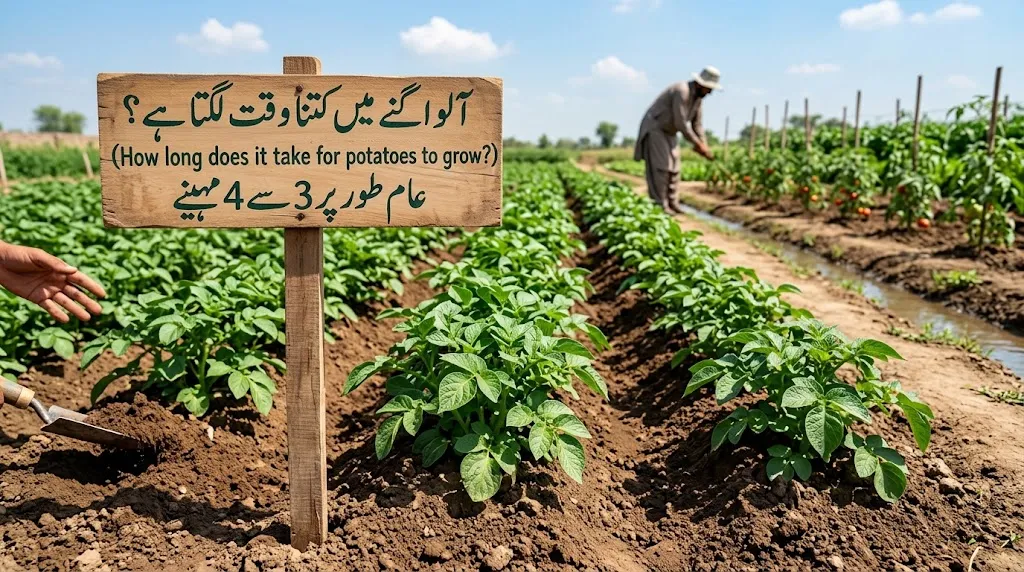
Most potatoes take approximately 2 to 4 months to reach harvest size. However, there isn’t one exact growing time for every potato plant.
The variety you plant is one of the biggest factors. Early-season potatoes generally mature faster, while late-season varieties need more time underground.
Your growing conditions also matter. Potatoes grow best when they have suitable temperatures, loose soil, enough moisture, and plenty of sunlight.
For example, if you plant an early potato variety under good conditions, you may begin harvesting young potatoes after about 60–75 days. For larger, mature potatoes, you may need to wait closer to 90–120 days.
In short: How long do potatoes take to grow? = Usually 70–120 days = About 2–4 months.
🌱 What Factors Affect Potato Growing Time?
Several conditions can make potatoes mature faster or slower.
- 🌡️ Temperature: Potatoes prefer cool to moderate growing conditions.
- ☀️ Sunlight: Healthy plants generally need several hours of sunlight each day.
- 💧 Water: Consistent moisture supports steady growth, but soggy soil can cause problems.
- 🌱 Soil: Loose, well-drained soil gives tubers room to develop.
- 🥔 Variety: Early potatoes mature faster than late-season varieties.
- 🌾 Planting conditions: Healthy seed potatoes and proper planting depth can encourage good development.
- 🐛 Pests and diseases: Problems affecting the leaves or roots can slow plant development.
Because of these factors, two people planting potatoes on the same date may harvest at different times.
📅 Potato Growing Time by Variety
Different potato varieties have different maturity periods.
| Potato Type | Approximate Growing Time | Typical Harvest |
| Early | 60–90 days | Small or new potatoes |
| Mid-season | 80–100 days | Medium-sized potatoes |
| Maincrop | 90–120+ days | Full-sized mature potatoes |
These are general ranges rather than strict deadlines. Always check the growing information for the specific variety you planted.
🌿 What Happens While Potatoes Are Growing?
Potatoes go through several stages before they are ready to harvest.
1. 🌱 Sprouting
After planting, the seed potato begins developing shoots. Depending on soil temperature and conditions, sprouts may appear above the soil within a few weeks.
2. 🍃 Leaf and Stem Growth
The plant develops green stems and leaves above the ground. During this stage, the plant captures sunlight and produces energy.
3. 🥔 Tuber Formation
Small potato tubers begin forming underground. You won’t necessarily see this process because the potatoes develop beneath the soil.
4. 🌾 Tuber Enlargement
The underground potatoes gradually increase in size. Keeping the plants healthy during this period helps support tuber development.
5. 🍂 Plant Maturity
As mature potatoes approach harvest time, the leaves and stems may begin turning yellow and dying back. This can be an important sign that the crop is nearing maturity.
🕓 When Are Potatoes Ready to Harvest?
The best harvest time depends on the type of potato you want.
For new potatoes, you can often harvest earlier while the plants are still green. These potatoes are usually smaller and have thin, delicate skins.
For mature potatoes, gardeners generally wait until the plant naturally begins dying back. Once the foliage has yellowed and died, the tubers have had more time to develop.
If you’re growing potatoes for long-term storage, allowing the skins to mature properly can help them keep better after harvesting.
A simple way to check is to carefully dig around one plant and inspect a potato. If the potatoes are still very small, you may want to give the plants more time.
🧺 How Do You Know When to Dig Up Potatoes?
Look for these signs:
- 🍂 Leaves and stems are turning yellow or dying back.
- 🥔 Potatoes have reached the size you want.
- 🌱 The variety has reached its expected maturity period.
- 🧤 The potato skins feel firm rather than extremely delicate.
- 🌦️ The soil is suitable for harvesting and not excessively wet.
Don’t rely on the calendar alone. The condition of the plant and the potatoes themselves can give you useful clues.
💬 Common Questions About Growing Potatoes
Q: Can I harvest potatoes before 70 days?
Yes. Some early varieties can produce small new potatoes in less time, especially under favorable growing conditions.
Q: How long do potatoes take to grow from seed potatoes?
Most potatoes grown from seed potatoes take roughly 70–120 days to reach maturity, depending on the variety and conditions.
Q: Do potatoes grow faster in warm weather?
Not necessarily. Potatoes generally prefer cool to moderate conditions. Excessive heat can interfere with healthy tuber development.
Q: Can I leave potatoes in the ground after the plants die?
Often, yes, particularly with mature storage potatoes, but conditions matter. Leaving them too long can expose them to pests, disease, or unfavorable soil conditions.
🥔 New Potatoes vs. Mature Potatoes
The biggest difference is when you harvest them.
| Feature | New Potatoes | Mature Potatoes |
| Harvest time | Earlier | Later |
| Size | Usually smaller | Usually larger |
| Skin | Thin and delicate | Firmer |
| Storage | Shorter | Better for storage |
| Flavor | Fresh and tender | More developed |
If you want tender potatoes for an immediate meal, an earlier harvest can work well. If you want potatoes that can be stored, allowing them to mature fully is generally more suitable.
🌦️ Tips for Growing Potatoes Successfully
If you’re trying to get a healthy potato crop, a few basic practices can make the process easier.
Choose the Right Variety
Pick a variety suited to your local growing conditions and the harvest you want. Early varieties are useful when you want potatoes sooner, while maincrop varieties can provide larger potatoes and better storage potential.
Give Plants Enough Space
Avoid overcrowding your potato plants. Adequate spacing gives the plants room to develop and makes it easier to care for them.
Keep the Soil Moist
Potatoes need consistent moisture while growing. However, avoid keeping the soil constantly waterlogged.
Protect Developing Tubers
As potato plants grow, gardeners often add soil around the stems, a practice commonly called hilling. This helps cover developing tubers and prevents them from being exposed to sunlight.
Watch the Foliage
Keep an eye on the leaves for signs of pests, disease, or unusual discoloration. Healthy foliage supports the plant while the tubers develop underground.
❓ FAQs
1. How many months does it take to grow potatoes?
Most potatoes take around 2 to 4 months, or approximately 70–120 days, depending on the variety and growing conditions.
2. What is the fastest-growing potato?
Early potato varieties are generally the fastest to mature. Some can be harvested in roughly 60–90 days.
3. Can potatoes grow in 2 months?
Some early varieties can produce small new potatoes in around two months under favorable conditions, although mature potatoes may require more time.
4. How do I know when potatoes are ready?
Check the expected maturity period and look for signs such as yellowing or dying foliage. You can also carefully dig around a plant to inspect the tubers.
5. Do potatoes need full sun?
Potatoes generally grow best with plenty of sunlight. Good light helps the plant produce energy for tuber development.
6. How often should potatoes be watered?
They benefit from consistent moisture, particularly while tubers are developing. The exact watering schedule depends on rainfall, soil, temperature, and growing conditions.
7. Why are my potatoes taking so long to grow?
Slow growth can result from unsuitable temperatures, poor soil, insufficient moisture, limited sunlight, pests, disease, or simply a slower-maturing variety.
8. Can I grow potatoes in containers?
Yes. Potatoes can be grown successfully in suitable containers as long as they have enough depth, drainage, soil, and sunlight.
9. Do potatoes grow underground?
Yes. The edible tubers develop underground from the potato plant’s stems.
10. Should I harvest potatoes when the flowers appear?
Flowering can indicate that tubers are developing, but it does not always mean the potatoes are fully mature. Harvest timing depends on the variety and whether you want new or mature potatoes.
11. How long after flowering can potatoes be harvested?
The timing varies by variety. Flowering is not a precise harvest date, so consider the expected maturity period and the condition of the plant.
12. Can potatoes be harvested while the plant is green?
Yes, small new potatoes can often be harvested while the plant is still green. Mature potatoes generally need more time.
13. What happens if I harvest potatoes too early?
Early-harvested potatoes are usually smaller and have thinner skins. They can still be delicious, but they may not have the storage qualities of fully mature potatoes.
14. What happens if I leave potatoes in the ground too long?
Depending on conditions, potatoes may become vulnerable to pests, disease, rot, or damage from weather. Harvesting at the appropriate time is important.
15. Do different potato varieties grow at different speeds?
Yes. Early, mid-season, and maincrop varieties can have significantly different maturity periods.
16. Can I grow potatoes year-round?
This depends heavily on your local climate. Potatoes generally perform best when temperatures are suitable for their growth rather than during extreme heat or cold.
17. Do potatoes need fertilizer?
Potatoes need nutrients for healthy growth, but excessive fertilizer can sometimes encourage foliage rather than desirable tuber development. Soil testing can help determine what nutrients are needed.
18. Can I grow potatoes from store-bought potatoes?
It is possible for some store potatoes to sprout, but certified seed potatoes are generally a more reliable choice for growing because they are selected and prepared for planting.
19. How long do potatoes take to grow after planting?
A typical range is approximately 70–120 days, although early potatoes may be ready sooner and some varieties can take longer.
20. What is the easiest way to grow potatoes?
Start with suitable seed potatoes, use loose well-drained soil, provide adequate sunlight and moisture, protect developing tubers, and monitor the plants until they reach maturity.
🌟 Conclusion:
So, how long does it take for potatoes to grow? In most cases, you can expect around 70 to 120 days, but the exact timing depends on the potato variety and growing conditions.
If you’re growing early potatoes, you may be able to enjoy a harvest in around two months. For larger mature potatoes intended for storage, you’ll generally need to wait longer.
The best approach is to combine the expected maturity time with visual signs from the plant.
With good soil, suitable moisture, enough sunlight, and a little patience, your tiny seed potatoes can eventually turn into a rewarding homegrown harvest. 🥔🌱