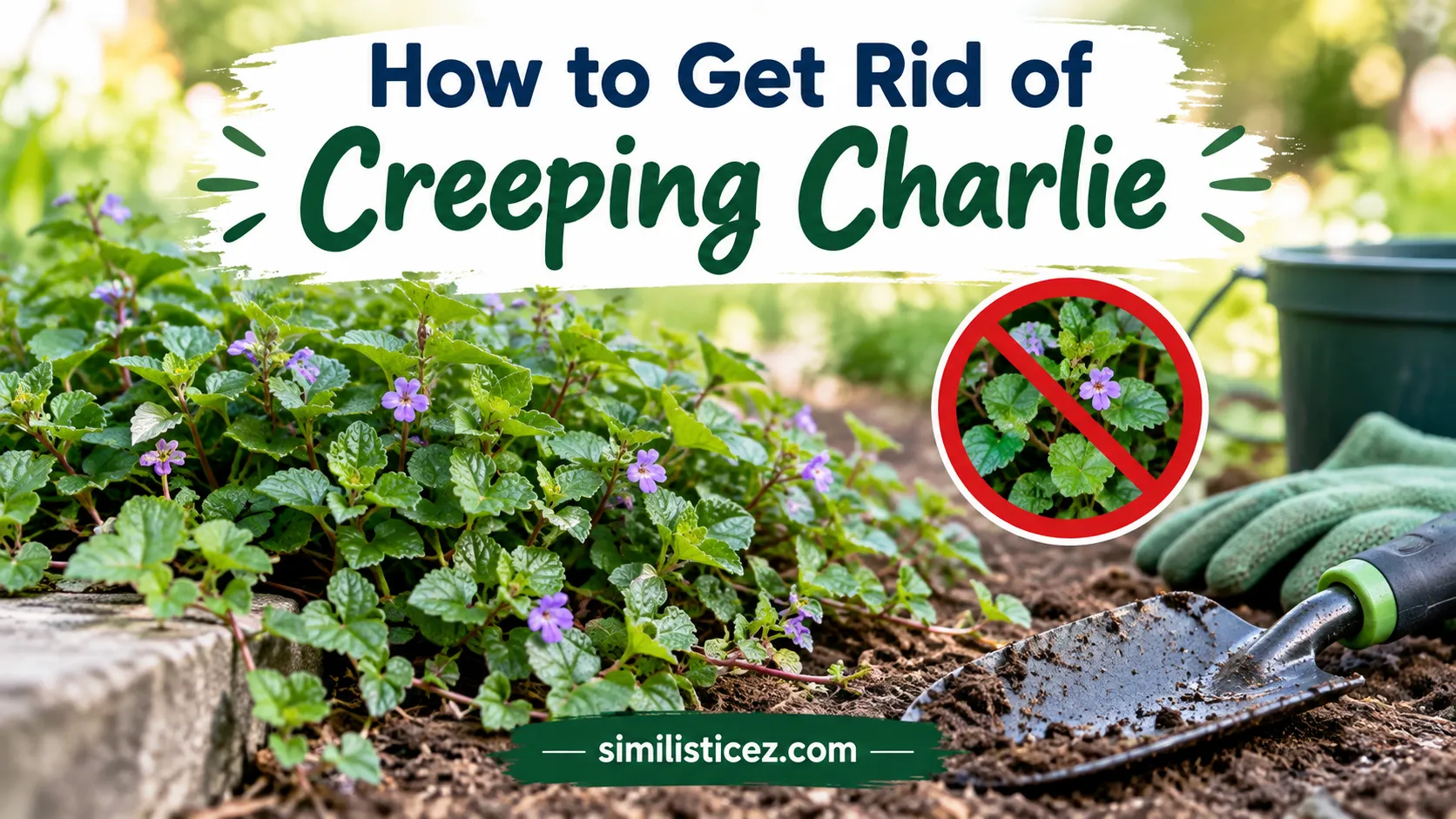
Have you ever looked across your lawn and noticed a fast-spreading green vine taking over areas where grass should be? I had that exact problem when I first noticed Creeping Charlie spreading through my yard.
At first, I thought it was just another harmless groundcover. But after watching it spread through the lawn and garden beds, I realized it could quickly become difficult to control.
If you are dealing with the same problem, don’t worry. Getting rid of Creeping Charlie is possible with the right approach.
The key is to understand why it spreads, choose the right removal method, and make your lawn less inviting to this persistent weed.
Quick Answer:
To get rid of Creeping Charlie, remove small infestations by hand, improve lawn health, and use a suitable broadleaf weed killer when necessary. Repeat treatment may be needed because the plant can regrow from remaining stems and roots.
🧠 What Is Creeping Charlie?
Creeping Charlie, also called ground ivy, is a low-growing perennial weed that spreads along the ground. Its scientific name is Glechoma hederacea. It has rounded, scalloped leaves and small flowers that can appear in spring.
The plant spreads through creeping stems called stolons. These stems can root at different points, allowing a small patch to turn into a much larger infestation.
Creeping Charlie commonly appears in lawns, flower beds, shaded areas, and places where soil stays moist.
In short: Creeping Charlie = ground ivy = a spreading perennial lawn weed.
🌱 Why Is Creeping Charlie So Difficult to Remove?
Creeping Charlie can be frustrating because simply pulling out the visible leaves does not always solve the problem.
Its creeping stems can root along the ground. If pieces remain behind, they may continue growing.
It also tends to thrive where grass is weak.
Common conditions that can encourage Creeping Charlie include:
- 🌳 Heavy shade
- 💧 Moist soil
- 🌱 Thin or weak grass
- 🪴 Poorly maintained lawn areas
- 🌧️ Excess moisture
- ☀️ Limited sunlight
This is why removing the weed while improving the growing conditions is often more effective than relying on one treatment.
🧤 How to Get Rid of Creeping Charlie by Hand
For small infestations, manual removal can be a practical first step.
Step 1: Moisten the Soil
Water the area lightly before pulling the weed. Moist soil can make it easier to remove the plant and its roots.
Step 2: Pull the Plant Carefully
Grab the Creeping Charlie close to the soil and pull gently. Try to remove as much of the plant and rooted stems as possible.
Step 3: Follow the Runners
Look for creeping stems spreading away from the main patch. Remove these runners instead of only pulling the leaves you can see.
Step 4: Check the Area Again
Return after several days or weeks and look for new growth. Small pieces left behind can produce another patch.
For larger infestations, hand removal can become time-consuming, so other methods may be more practical.
🧪 Can Weed Killer Get Rid of Creeping Charlie?
Yes, herbicides labeled for broadleaf weeds can be used to control Creeping Charlie in lawns.
However, not every weed killer is appropriate for every lawn. Always read the product label carefully and make sure the product is suitable for your grass type and intended location.
Some products contain combinations of broadleaf herbicides designed to target weeds such as ground ivy.
For better results:
- 🌿 Apply the product when Creeping Charlie is actively growing.
- 📋 Follow the label’s mixing and application instructions.
- 🌧️ Pay attention to the label’s rain-related instructions.
- 🐕 Keep children and pets away according to the product directions.
- 🔁 Expect that repeat applications may sometimes be necessary.
Avoid applying more product than the label recommends. More herbicide does not automatically mean better results and can damage desirable plants or grass.
📅 When Is the Best Time to Treat Creeping Charlie?
Timing can make a difference.
Creeping Charlie is generally easier to control when it is actively growing. Many lawn-care recommendations focus on treating perennial broadleaf weeds during periods when they are moving nutrients into their roots.
Fall can be an effective treatment period for many perennial lawn weeds because plants are preparing for winter.
However, the correct timing depends on your climate, grass type, product label, and local growing conditions.
Always follow the specific herbicide label rather than applying a product simply because it is a particular month.
🌾 How to Prevent Creeping Charlie From Coming Back
Removing existing weeds is only half the job. A healthy, dense lawn can make it harder for Creeping Charlie to establish itself.
☀️ Improve Sunlight
Creeping Charlie often performs well in shady locations. If practical, improve sunlight by pruning branches or changing landscaping that creates excessive shade.
💧 Improve Drainage
Avoid keeping the soil unnecessarily wet. If an area consistently stays soggy, investigate drainage problems.
🌱 Grow Thick Grass
Healthy grass can compete with weeds for sunlight, water, nutrients, and space.
Follow appropriate mowing, watering, fertilizing, and overseeding practices for your particular grass type.
🪴 Fix Bare Spots
Bare soil gives weeds room to establish. Repair thin areas with suitable grass seed or another appropriate groundcover.
🚫 Common Mistakes When Removing Creeping Charlie
Some approaches can make the problem more frustrating.
Mistake 1: Pulling Only the Leaves
Removing the leaves while leaving rooted stems behind can allow the plant to return.
Mistake 2: Using Too Much Herbicide
Applying extra herbicide can harm your lawn and surrounding plants. Always follow the label.
Mistake 3: Ignoring Shade and Moisture
If the conditions that favor Creeping Charlie remain unchanged, new plants may continue appearing.
Mistake 4: Expecting One Treatment to Solve Everything
Established perennial weeds may require repeated attention. Inspect the area regularly and respond to new growth.
🔄 Natural Alternatives for Creeping Charlie Control
If you prefer not to use herbicides, physical removal is the main practical option for smaller patches.
You can repeatedly pull or dig out the weed while trying to remove rooted runners. Mulching can also help suppress weeds in suitable garden areas, although Creeping Charlie may continue spreading from edges or gaps.
For lawns, improving grass density is particularly important because prevention is often easier than repeatedly fighting a large infestation.
Be cautious with homemade weed-killer recipes. Household substances such as vinegar or salt can damage desirable plants and soil, so they are not automatically safer simply because they are homemade.
💬 Quick Comparison of Removal Methods
| Method | Best For | Main Advantage |
| Hand pulling | Small patches | No herbicide required |
| Digging | Garden beds | Can remove rooted sections |
| Broadleaf herbicide | Larger lawn infestations | Practical for widespread weeds |
| Lawn improvement | Long-term prevention | Makes conditions less favorable |
| Mulching | Garden areas | Helps suppress new growth |
❓ FAQs
1. What is the fastest way to get rid of Creeping Charlie?
For large lawn infestations, a suitable broadleaf herbicide may be more practical than hand pulling. Small patches can often be removed manually.
2. Can I pull Creeping Charlie by hand?
Yes. Hand pulling can work well for small infestations, especially when you remove as much of the rooted plant and creeping stems as possible.
3. Will Creeping Charlie grow back after pulling?
It can. Pieces of rooted stems left in the soil may produce new growth, so inspect the area regularly.
4. Does mowing kill Creeping Charlie?
Mowing can remove visible growth but generally does not eliminate an established Creeping Charlie infestation because the plant can continue growing from its rooted stems.
5. Does Creeping Charlie prefer shade?
Creeping Charlie commonly thrives in shady, moist areas, although it can grow in other conditions as well.
6. Can vinegar kill Creeping Charlie?
Vinegar may damage plant foliage, but it can also harm desirable plants and does not necessarily eliminate established roots.
7. Should I remove Creeping Charlie from flower beds?
If it is spreading aggressively, removal can prevent it from competing with ornamental plants.
8. Why does Creeping Charlie keep coming back?
It can return because creeping stems may root along the ground. Poor lawn conditions can also give it opportunities to reestablish.
9. Can healthy grass prevent Creeping Charlie?
A dense, healthy lawn can reduce opportunities for weeds to establish, although it cannot guarantee that Creeping Charlie will never appear.
10. When should I treat Creeping Charlie with herbicide?
Treatment timing depends on the product and local growing conditions. Follow the product label for the recommended application timing.
11. Can I compost Creeping Charlie?
Be careful. Composting weeds that contain viable roots or stems can allow them to survive if the compost does not reach conditions sufficient to destroy them.
12. Is Creeping Charlie harmful to grass?
It competes with grass for growing space and can form dense patches, especially where turf is already weak.
13. Does Creeping Charlie spread quickly?
It can spread efficiently because its creeping stems can root at multiple points.
14. Can I dig up Creeping Charlie?
Yes. Digging can be useful in garden beds, but remove rooted sections thoroughly and monitor the area afterward.
15. Will fertilizer kill Creeping Charlie?
Regular lawn fertilizer is not a weed killer. Fertilization can support healthy grass, which may help the lawn compete with weeds.
16. Can I prevent Creeping Charlie completely?
Complete prevention can be difficult, but improving lawn density, sunlight, drainage, and overall growing conditions can reduce opportunities for it to spread.
17. Is Creeping Charlie the same as ground ivy?
Yes. Creeping Charlie is a common name for ground ivy, Glechoma hederacea.
18. Should I treat Creeping Charlie in wet weather?
Follow the herbicide label regarding weather and rain. Applying products under unsuitable conditions can reduce effectiveness or create unwanted runoff.
19. How long does it take to eliminate Creeping Charlie?
The timeline varies depending on infestation size, removal method, growing conditions, and whether the weed returns from remaining roots or stems.
20. What is the best long-term strategy?
Combine removal with prevention. Eliminate existing patches, strengthen the lawn, address excessive shade or moisture where practical, and monitor for new growth.
🌿 Conclusion:
Learning how to get rid of Creeping Charlie is mostly about combining the right removal method with long-term lawn care.
For a few small patches, careful hand removal may be enough. Larger infestations may require a properly selected broadleaf herbicide and repeated monitoring.
The most important step is not simply removing what you can see. Look at the conditions that allowed Creeping Charlie to spread in the first place.
A thicker, healthier lawn and better growing conditions can make it much harder for this persistent weed to take over again.

Hi, I’m Ethan Caldwell. I enjoy writing simple and creative similes. I help readers express feelings like love and happiness in easy words on Similisticez.com.