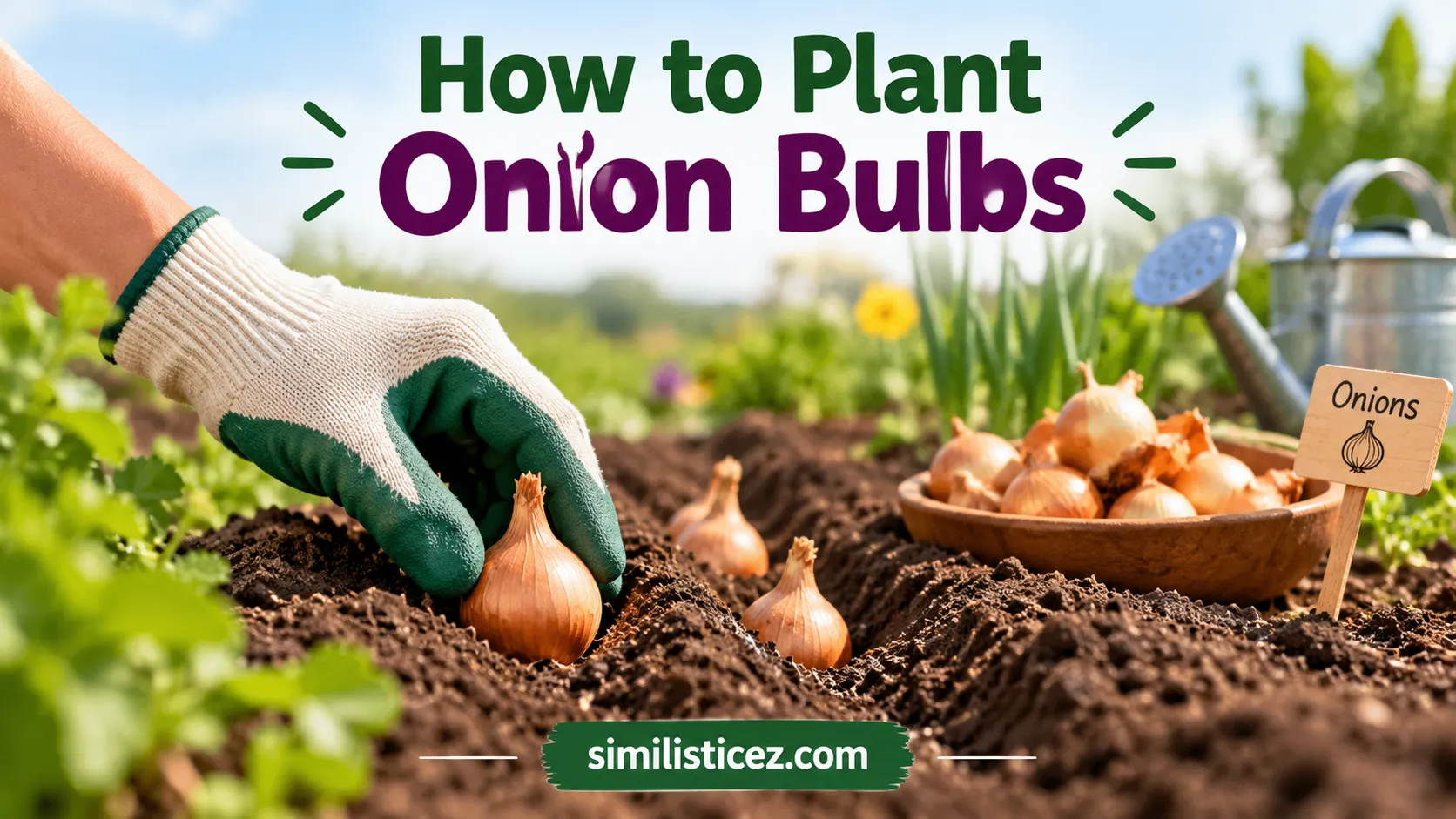
Have you ever bought onion bulbs for your garden and wondered what to do next? I remember the first time I tried planting onions.
I pushed the bulbs into the soil, covered them completely, and waited for healthy onions to grow. A few weeks later, I realized I had planted them too deeply and had not given them enough sunlight.
That experience taught me that onions are simple to grow, but planting them correctly makes a big difference. If you are also wondering how to plant onion bulbs, this guide will walk you through the process step by step.
You will learn when to plant, how deep to place the bulbs, how much space they need, and how to care for them afterward.
Quick Answer:
To plant onion bulbs, choose healthy bulbs, prepare loose and well-draining soil, place each bulb with the pointed end facing upward, cover it lightly with soil, and water gently.
Keep the plants in a sunny location and maintain consistent moisture.
🧅 What Does “How to Plant Onion Bulbs” Mean?
The phrase “how to plant onion bulbs” refers to the process of growing onions by placing small onion bulbs, often called onion sets, into prepared garden soil.
Unlike growing onions entirely from seeds, planting onion sets is usually a straightforward option for home gardeners. The small bulbs already have a head start, so they can establish roots and begin developing into mature onions.
Start by choosing firm, healthy bulbs without soft spots, mold, or signs of rot. Prepare a garden bed with loose soil that drains well. Make a small hole and place the bulb with its pointed end facing upward.
The bulb should not be buried too deeply. Usually, only a small amount of soil needs to cover the bulb. Leave enough space between plants so the developing onions have room to expand.
In short: How to plant onion bulbs = place healthy onion sets correctly in loose soil = give them sunlight, water, and room to grow.
🌱 Where Is Onion Bulb Planting Commonly Done?
Onion bulbs can be planted in many growing environments, provided the plants receive suitable sunlight, soil, and moisture.
- 🏡 Home Gardens: Onion sets are easy to grow in backyard vegetable gardens.
- 🪴 Containers: You can grow onions in pots or containers with good drainage.
- 🌿 Raised Beds: Raised beds provide loose soil and good drainage for developing bulbs.
- 🌾 Vegetable Gardens: Larger garden beds can accommodate rows of onions.
- ☀️ Sunny Locations: Onions generally perform well where they receive plenty of sunlight.
- 🌍 Different Climates: The ideal planting time depends on your local climate and onion variety.
Planting onions is not a texting or social-media phrase. It is a practical gardening search term, so the most useful information is about soil preparation, planting depth, spacing, watering, sunlight, and harvesting.
💬 Examples of How to Plant Onion Bulbs
Here are some simple examples of the planting process:
A: How deep should I plant onion bulbs?
B: Plant them shallowly, with the pointed top facing upward.
A: Can I grow onion bulbs in a pot?
B: yes 🧅 just make sure the container has drainage holes.
A: Should I water onions after planting?
B: yes, water the soil gently so it becomes moist but not waterlogged.
A: Do onions need sunlight?
B: yes ☀️ choose a sunny spot for healthy growth.
A: Can I plant several onion bulbs together?
B: you can plant them in rows, but leave enough space between each bulb.
A: What type of soil is best for onions?
B: loose, fertile, well-draining soil works well.
A: My onion bulb is soft. Should I plant it?
B: probably not. choose a firm, healthy bulb instead.
🕓 When to Plant Onion Bulbs and When to Avoid It
✅ When To Plant
- 🌱 Plant healthy, firm onion bulbs or sets.
- ☀️ Choose a location with plenty of sunlight.
- 🌧️ Plant when the soil is workable rather than heavily waterlogged.
- 🌿 Use loose, fertile, well-draining soil.
- 🧅 Give each bulb enough space to develop.
- 💧 Water after planting to help settle the soil around the roots.
- 🌡️ Follow the recommended planting season for your onion variety and local climate.
❌ When Not To Plant
- Avoid bulbs that are rotten, moldy, or extremely soft.
- Avoid heavy, constantly waterlogged soil.
- Avoid planting in a location with very little sunlight.
- Do not bury onion bulbs deeply like some other root vegetables.
- Avoid overcrowding the bulbs.
- Do not keep the soil constantly saturated with water.
Simple Planting Comparison
| Situation | Example | Why It Works |
| Home garden | Plant bulbs in loose soil | Gives roots room to develop |
| Container | Use a pot with drainage holes | Helps prevent excess water |
| Raised bed | Plant onions in organized rows | Makes spacing and maintenance easier |
| Heavy soil | Improve the soil before planting | Better drainage supports healthy growth |
| Shady area | Move the onions to a sunnier location | Onions need adequate light |
🌿 Step-by-Step Guide: How to Plant Onion Bulbs
1. Choose Healthy Onion Bulbs
Start with firm, healthy onion sets. Avoid bulbs that have obvious mold, rot, or damaged areas. Healthy planting material gives your onions a better start.
2. Prepare the Soil
Break up hard soil and remove large stones, weeds, and plant debris. Onions develop better in loose soil because their roots can spread more easily.
If your soil holds too much water, improve drainage before planting. Compost or other suitable organic matter can also help improve soil structure.
3. Make Small Planting Holes
Create shallow holes or a narrow planting row. You do not need to make deep holes because onion bulbs should generally be planted close to the soil surface.
4. Place the Bulb Correctly
Put each onion bulb into the soil with the pointed end facing upward and the root end facing downward.
This orientation helps the emerging shoots grow toward the surface while the roots develop underneath.
5. Cover Lightly With Soil
Gently cover the bulb with soil. Avoid burying it too deeply. The upper portion of the bulb can remain close to the soil surface.
6. Give the Bulbs Enough Space
Spacing depends on the onion variety and the size of bulbs you want to grow. Generally, allowing adequate room between plants prevents unnecessary crowding and gives developing bulbs space.
7. Water Gently
Water the newly planted bulbs after planting. Keep the soil consistently moist during establishment, but avoid creating soggy conditions.
8. Provide Sunlight
Place your onions somewhere they can receive plenty of sunlight. Good light supports healthy leaf growth, which is important because the leaves help the plant produce energy for bulb development.
🔄 Similar Gardening Terms or Alternatives
| Term | Meaning | When to Use |
| Onion sets | Small onion bulbs used for planting | When discussing easy onion planting |
| Onion seedlings | Young onion plants | When starting onions from young plants |
| Onion seeds | Seeds that grow into onion plants | When starting onions from seed |
| Bulb planting | Planting bulbs directly in soil | General gardening instructions |
| Onion cultivation | The broader process of growing onions | Gardening or farming discussions |
❓ FAQs:
1. Which end of an onion bulb goes up?
The pointed or shoot end should generally face upward, while the root end goes downward.
2. How deep should onion bulbs be planted?
Onion sets are usually planted shallowly. Avoid burying the entire bulb deeply beneath the soil.
3. Do onion bulbs need sunlight?
Yes. Onions generally need a sunny growing location for healthy leaf and bulb development.
4. Can I plant onion bulbs in containers?
Yes. Containers can work well as long as they are large enough and have good drainage.
5. How often should I water planted onions?
Keep the soil consistently moist while avoiding excessive watering. The exact frequency depends on weather, soil, and container conditions.
6. Can I plant sprouting onions?
A sprouting onion may produce green growth, but results can vary. For reliable bulb production, healthy onion sets intended for planting are usually preferable.
7. What soil is best for onion bulbs?
Loose, fertile, well-draining soil is generally suitable for onions.
8. Can onions grow in heavy clay soil?
They can be challenging in heavy clay because compacted soil may restrict growth and drainage. Improving soil structure can help.
9. Should onion bulbs be completely covered?
No. Onion sets generally should not be buried deeply. Cover them lightly while keeping the planting shallow.
10. Can I grow onions in a small garden?
Yes. Onions are suitable for many home gardens, raised beds, and containers when given adequate light and spacing.
11. Why are my onion leaves turning yellow?
Yellowing can have several causes, including natural maturity, watering problems, nutrient issues, pests, or disease. Check the growing conditions before changing your care routine.
12. How long do onions take to grow?
Growing time varies considerably depending on the onion variety, planting material, climate, and growing conditions.
13. Can I plant onion bulbs in winter?
This depends on your local climate and the onion variety. Some varieties are suited to cooler seasons, while others perform better during different parts of the year.
14. Do onions need fertilizer?
Onions benefit from suitable nutrients, but fertilizer needs depend on your soil and growing conditions. Avoid applying fertilizer blindly.
15. Can I plant onions next to other vegetables?
Yes. Onions can be included in many vegetable gardens. Plan spacing according to the needs of all the plants nearby.
16. Why are my onions not forming large bulbs?
Possible factors include variety, planting time, sunlight, spacing, nutrients, watering, and the length of the growing season.
17. Should I remove weeds around onions?
Yes. Weeds can compete with onions for water, nutrients, light, and growing space, so regular weed control is helpful.
18. Can onion bulbs be planted in raised beds?
Yes. Raised beds can provide loose soil and improved drainage, making them a practical option for onion growing.
19. How do I know when onions are ready to harvest?
Mature onions often show signs such as leaves bending or falling over and the bulb reaching an appropriate size. Harvest timing varies by variety.
20. What is the easiest way to plant onions?
For many home gardeners, using healthy onion sets, loose soil, proper spacing, adequate sunlight, and consistent but controlled watering provides a simple starting method.
🌱 Conclusion:
Learning how to plant onion bulbs is easier than it may seem. Choose healthy bulbs, prepare loose and well-draining soil, plant them shallowly with the pointed end facing up, and give them enough sunlight, space, and water.
With regular care and patience, your small onion bulbs can grow into a healthy harvest.
If you use a garden bed, raised bed, or container, the right planting method gives your onions a strong start.