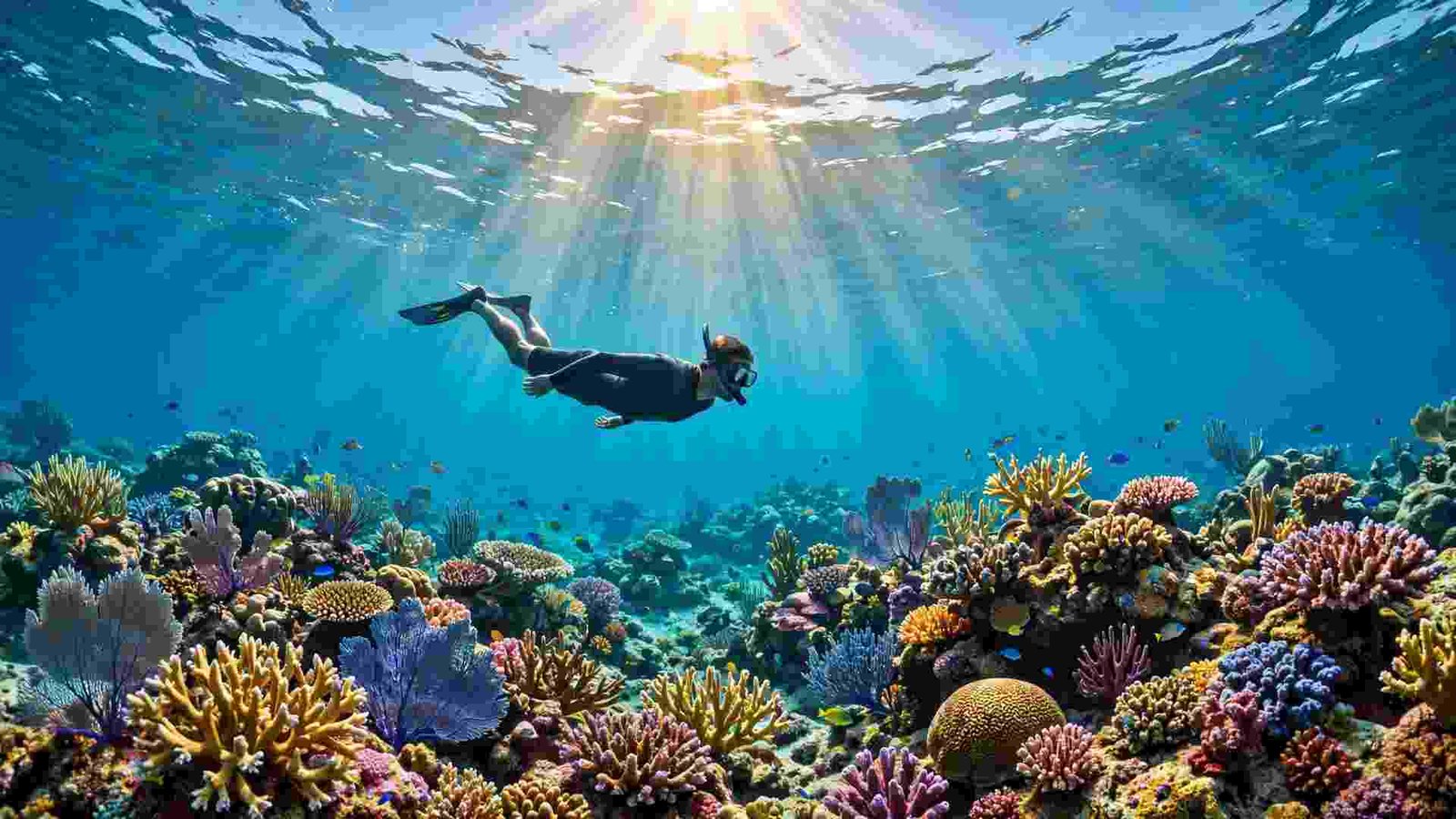
Floating above a coral reef, watching sea turtles glide past and schools of bright fish swirl below you, is one of the most magical experiences the ocean offers.
The good news is that learning how to snorkel in oceans does not require special athletic ability or scuba certification. It does require the right gear, a few basic techniques, and a healthy respect for open water.
This guide covers everything a beginner needs, from choosing a mask that seals properly and learning to breathe through a snorkel, to clearing water from your tube, picking a safe spot, and staying relaxed while you explore.
Quick Answer:
To snorkel in the ocean, fit a mask that seals without leaking, practice breathing slowly through the snorkel in shallow water, and float face-down with gentle fin kicks.
Stay with a buddy, avoid touching reefs or marine life, and choose calm, clear water away from boats and strong currents.
Step-by-Step Guide
Step 1: Get Gear That Fits Your Face
A leaky mask ruins the whole experience, so fit matters more than brand. Press the mask against your face without the strap and inhale gently through your nose. If it sticks for a few seconds, the seal is good. Choose a dry-top snorkel, which has a valve that closes when submerged and keeps most water out of the tube. Add comfortable fins that are snug but not tight, since fins that chafe will cut your trip short. If you are unsure, rent from a reputable dive shop where staff can help you fit everything before you hit the water.
Step 2: Practice Breathing in Shallow Water First
Before heading out over a reef, stand in waist-deep water and get comfortable breathing through the snorkel with your face submerged. The tube feels strange at first, and many beginners panic because the airflow seems restricted. Breathe slowly and deeply, in and out through your mouth, and keep the top of the snorkel above the surface. Spend ten to fifteen minutes just floating and breathing until the rhythm feels boring. Once breathing is second nature, everything else gets much easier.
Step 3: Learn to Clear Your Mask and Snorkel
Water will get in, and knowing how to clear it calmly is the core snorkeling skill. For the snorkel, use the blast method: take a quick deep breath and exhale sharply into the tube to shoot the water out the top. For the mask, tilt your head back slightly, press the top of the mask frame against your forehead, and exhale firmly through your nose to push water out the bottom seal. Practice both in shallow water until they feel routine. Staying calm during these little moments is what separates a relaxed snorkeler from a stressed one.
Step 4: Choose a Safe Entry Point and Conditions
Pick a beach with calm, clear water, a sandy entry, and a lifeguard if possible. Check the weather and surf forecast before you go, and avoid snorkeling when waves are rough, visibility is poor, or strong currents are reported. Enter the water slowly, walking backward if you are wearing fins, and float out past the breaking waves before you start exploring. Snorkel parallel to shore rather than swimming far out, and keep an eye on landmarks so you always know where your exit point is.
Step 5: Float, Relax, and Kick Gently
The secret to good snorkeling is doing less, not more. Lie face-down on the surface with your arms relaxed at your sides or gently sculling, and kick with slow, small movements from the hips rather than frantic splashing from the knees. Keep the snorkel tip above the waterline and your body horizontal so you glide instead of sinking. Big splashes scare fish away and tire you out fast. Think of yourself as drifting, not swimming, and the ocean will show you far more.
Step 6: Dive Down Briefly If You Want a Closer Look
Once you are comfortable on the surface, you can try short surface dives. Take a deep breath, fold forward at the waist, lift your legs, and let your body weight carry you down a few feet. Equalize the pressure in your ears by pinching your nose and blowing gently if you feel discomfort. Stay down only as long as you comfortably can on one breath, then angle back up and blast-clear your snorkel when you surface. Never dive alone, and never push your breath-hold limits.
Step 7: Respect Marine Life and the Reef
This matters as much as any technique. Never stand on coral, since even a light touch can kill polyps that took decades to grow. Do not touch, chase, or feed fish, turtles, or rays, and keep a respectful distance from anything unfamiliar. Many ocean creatures, from stingrays to jellyfish to sea urchins, can hurt you if startled.
Tips and Common Mistakes
- Always snorkel with a buddy. Even strong swimmers can get cramps or get surprised by currents, and a partner is your best safety device.
- Do not touch the bottom with your fins. Kicking up sand ruins visibility for everyone and damages fragile reef ecosystems.
- Keep your snorkel strap snug, not tight. An overtight mask leaks more and gives you a headache, while a gentle seal works better.
- Rinse your mask with fresh water after every session. Salt and sand left on the lens and skirt shorten its life and cause leaks next time.
- Avoid snorkeling right after heavy rain. Runoff clouds the water and can carry bacteria, making for poor visibility and a less safe swim.
- Learn the blast clear before you need it. Beginners who never practice clearing panic when water enters the tube in deeper water.
- Wear fins even if you are a good swimmer. Fins let you move efficiently against mild currents without exhausting yourself.
- Check for boats before surfacing. In busy areas, use a bright swim buoy or stay within marked snorkeling zones to stay visible.
FAQs:
Q: Do I need to be a strong swimmer to snorkel in the ocean?
You should be comfortable in the water, but you do not need to be an athlete. Most snorkeling happens floating on the surface, and a snorkel vest or flotation belt adds safety and confidence. That said, if you cannot swim at all, take basic swimming lessons first. Ocean conditions change, and the ability to tread water calmly is an important safety baseline.
Q: What is the best time of day to snorkel in the ocean?
Morning is usually best. Winds are typically calmer, the water is clearer, and sunlight penetrating from a high angle lights up the reef beautifully. Visibility often drops in the afternoon as winds pick up and stir the water. Arriving early also means fewer people, which means less disturbed sediment and calmer marine life.
Q: How do I keep my mask from fogging up?
Fogging happens when warm air from your face meets the cooler lens. Rub a small drop of baby shampoo or commercial defogger on the inside of the dry lens, rinse lightly, and put the mask on. Spitting in the mask and rinsing is the old diver trick and works surprisingly well. Never touch the inside of the lens once it is treated, or you will wipe the coating off.
Q: Is snorkeling in the ocean dangerous?
Snorkeling is quite safe when you respect the conditions: calm water, a buddy, proper gear, and staying within your limits. The main risks are currents, boat traffic, sunburn, and encounters with marine life like jellyfish or urchins. Check local conditions, ask lifeguards or dive shops about hazards, and get out of the water if conditions change or you feel tired.
Q: Should I buy or rent snorkeling gear?
Rent for your first few outings, especially from a dive shop that helps with fitting. Once you know you enjoy it and you know your sizes, buying your own mask and snorkel is worth it for hygiene and fit alone. A personal mask that seals perfectly to your face will outperform any rental, and quality fins make swimming far more enjoyable.
Conclusion
Learning how to snorkel in oceans comes down to three things: gear that fits, calm breathing through the snorkel, and respect for the water.
Practice the basics in the shallows until clearing your mask and snorkel feels automatic, then venture out over the reef with a buddy on a calm morning. Keep your kicks gentle, your hands off the coral, and your eyes open.
The ocean rewards relaxed snorkelers with unforgettable sights, and with these skills under your belt, every coastline becomes a window into another world.

Learn simple and creative similes with Mason Reid at similisticez.com to improve writing skills with easy examples and explanations.