The first time I noticed my gums looking a little lower around one of my teeth, I honestly thought it was just normal.
Then I started feeling a sharp sensation whenever I drank something cold, and I became curious about how to treat gum recession.
I searched for home remedies, special toothpaste, and ways to make my gums grow back. That search taught me something important: receding gums can have different causes, so the right treatment depends on why the recession happened in the first place.
Some steps can help protect your gums and reduce sensitivity, while more noticeable recession may need professional dental treatment.
Quick Answer:
Gum recession is treated by identifying and addressing its cause, improving oral hygiene, managing sensitivity, treating gum disease when present, and sometimes using procedures such as dental bonding or gum grafting.
🧠 What Does Gum Recession Mean?
Gum recession happens when the gum tissue around a tooth pulls back and exposes more of the tooth root. The exposed root does not have the same strong enamel covering found on the visible part of the tooth, which can make it more sensitive and vulnerable to decay. [1]
Several things can contribute to gum recession. These may include brushing too aggressively, gum disease, plaque or tartar buildup, tobacco use, tooth positioning, trauma, and naturally thin gum tissue. [1]
A simple example is noticing that one tooth suddenly appears longer than the others or that cold water causes a sharp feeling near the gumline.
In short: Gum recession = gums pulling away from teeth = exposed roots, sensitivity, and a need to protect the affected area.
🦷 How to Treat Gum Recession
The best treatment depends on the cause and severity of the recession. A dentist can examine your gums, measure the recession, check for periodontal pockets, and determine whether gum disease or another problem is involved. [1]
1. Improve Your Brushing Technique
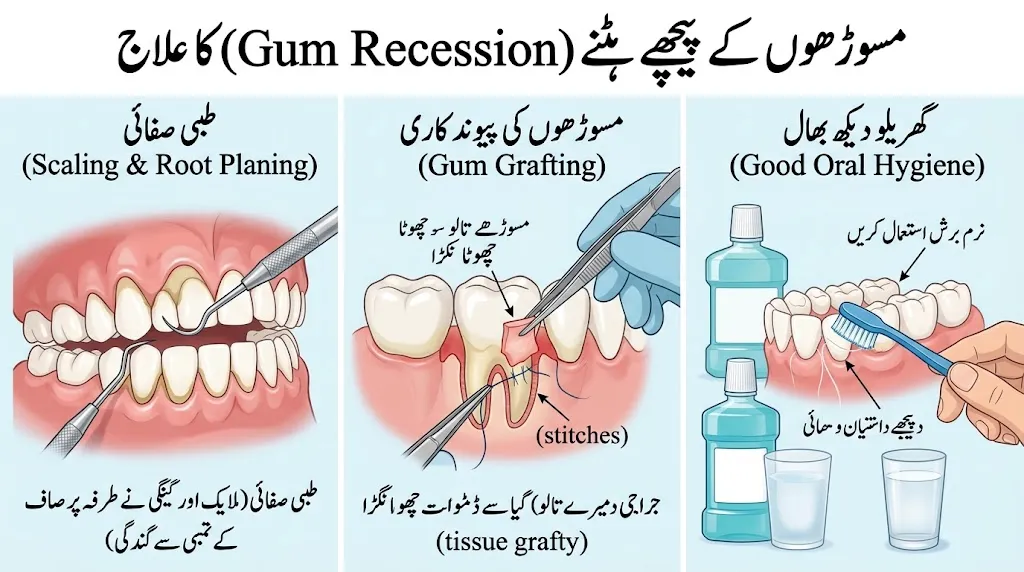
Brushing is important, but brushing harder does not mean brushing better. Aggressive brushing can contribute to gum recession, so using a soft-bristled toothbrush and gentle movements can help protect your gumline. [1]
Try to brush twice a day and avoid scrubbing the gums forcefully.
2. Keep Plaque and Tartar Under Control
Plaque buildup can contribute to gum problems. Regular brushing, daily cleaning between your teeth, and professional dental cleanings can help maintain healthier gums.
If tartar has built up below the gumline or gum disease is present, your dentist may recommend scaling and root planing, also called deep cleaning. This treatment removes plaque and tartar from areas beneath the gums. [2]
3. Treat Gum Disease
Periodontitis can cause damage to the tissues and bone supporting your teeth and may lead to gum recession. Treatment depends on how advanced the disease is and may include professional cleaning, scaling and root planing, medications, or periodontal surgery. [2][3]
Treating the underlying gum disease is important because simply trying to cover the exposed area does not address an active infection.
4. Manage Tooth Sensitivity
Exposed tooth roots can cause sensitivity to cold, heat, sweets, or brushing. A dentist may recommend fluoride treatment or desensitizing products to reduce discomfort. [1]
Some desensitizing toothpastes contain ingredients such as potassium nitrate or stannous fluoride. These products may take some time to provide noticeable relief, so consistent use matters. [1]
5. Dental Bonding
In selected cases, a dentist can use tooth-colored composite material to cover an exposed root. This may improve the appearance of the tooth and reduce discomfort. [1]
Bonding does not make the original gum tissue grow back, but it can provide protection and camouflage the exposed area.
6. Gum Grafting
For significant gum recession, a periodontist may recommend gum graft surgery. During this procedure, tissue is placed over the exposed root to increase gum coverage. The graft may come from the roof of your mouth or another appropriate tissue source. [1][4]
Gum grafting is one of the main procedures used to treat gum recession when additional gum tissue is needed.
🪥 Can Receding Gums Grow Back Naturally?
This is one of the most common questions people ask after noticing recession.
Unfortunately, receding gums generally do not grow back on their own. However, treatment can help prevent the recession from getting worse and can address problems such as sensitivity or gum disease. [1]
If you notice your gums becoming lower, do not wait for them to return naturally. A dental examination can help identify the cause and determine what treatment is appropriate.
📱 Where Is Gum Recession Commonly Discussed?
People commonly search for information about gum recession on:
- 🔎 Google and other search engines
- 📱 Health and dental websites
- 🦷 Dental clinic websites
- 💬 Reddit and online health discussions
- 📺 YouTube dental-education videos
- 📲 Social media health communities
Unlike a slang term, gum recession is a medical and dental topic, so it is better discussed using clear and accurate language rather than casual abbreviations.
💬 Examples of Questions People Ask
Here are realistic examples of how someone might search for information:
A: “why does my tooth look longer than before?”
B: “it could be gum recession. i’d get it checked by a dentist.”
A: “can receding gums grow back?”
B: “usually the lost gum tissue doesn’t grow back naturally, but treatment can protect the area.”
A: “my gums hurt when i drink cold water.”
B: “exposed roots from gum recession can cause sensitivity. a dentist can check the cause.”
A: “can brushing too hard cause gum recession?”
B: “yes, aggressive brushing can contribute to recession.”
A: “do i need gum surgery?”
B: “not always. treatment depends on how severe the recession is and what caused it.”
🕓 When to See a Dentist and When to Take Extra Care
✅ Make a Dental Appointment If:
- You notice your teeth looking longer.
- Your gumline appears to be moving downward.
- Your teeth have become sensitive.
- Your gums bleed frequently.
- You have swollen or painful gums.
- A tooth feels loose.
- You notice exposed tooth roots.
- You have persistent bad breath.
These symptoms can have different causes, and a dentist can determine whether gum recession, periodontal disease, or another dental problem is responsible. [1][3]
❌ Don’t Rely Only on Home Remedies If:
- The recession is getting worse.
- You have significant pain or sensitivity.
- Your gums bleed regularly.
- You have loose teeth.
- You suspect gum disease.
- A large section of a tooth root is exposed.
Home care can support oral health, but it cannot replace professional diagnosis when recession or gum disease is significant.
| Situation | What You Can Do | Why It Matters |
|---|---|---|
| Mild sensitivity | Use a suitable desensitizing toothpaste | May reduce discomfort |
| Aggressive brushing | Switch to gentle brushing with a soft-bristled brush | Helps avoid further irritation |
| Plaque buildup | Improve daily oral hygiene | Helps control bacterial buildup |
| Tartar below gums | See a dentist or hygienist | Professional cleaning may be needed |
| Gum disease | Follow professional treatment | Controls the underlying condition |
| Significant recession | Ask about periodontal evaluation | Advanced cases may need specialized treatment |
🔄 Treatment Options and Alternatives
There is no single treatment that works for every case of gum recession. Your dentist may recommend different approaches depending on the cause and severity.
| Treatment | Main Purpose | When It May Be Used |
|---|---|---|
| Gentle oral hygiene | Protect gum tissue | Everyday prevention and care |
| Desensitizing toothpaste | Reduce sensitivity | Exposed or sensitive roots |
| Professional cleaning | Remove plaque and tartar | Gum inflammation or buildup |
| Scaling and root planing | Clean beneath the gumline | Periodontal disease |
| Dental bonding | Cover exposed root | Selected mild recession cases |
| Gum grafting | Add tissue over exposed roots | More significant recession |
Professional treatment may also involve addressing tooth alignment, tobacco use, trauma, or other contributing factors when relevant. [1][2]
❓ FAQs
1. Can gum recession be reversed?
The lost gum tissue generally does not grow back naturally. Treatment focuses on controlling the cause and preventing further damage. [1]
2. What is the best treatment for gum recession?
There is no single best treatment for everyone. The appropriate option depends on the cause, location, and severity of the recession.
3. Can brushing too hard cause receding gums?
Yes. Aggressive brushing is one factor associated with gum recession. [1]
4. Can gum disease cause gum recession?
Yes. Periodontal disease can damage the tissues supporting teeth and contribute to recession. [3]
5. Can toothpaste fix receding gums?
Toothpaste cannot rebuild lost gum tissue. Desensitizing toothpaste may help manage sensitivity associated with exposed roots. [1]
6. Do I need gum graft surgery?
Not necessarily. Some cases can be managed without surgery, while significant recession may be treated with gum grafting. [1][4]
7. Is gum recession painful?
It can cause sensitivity or discomfort, especially when exposed roots come into contact with cold, heat, sweets, or a toothbrush. [1]
8. Can receding gums cause tooth sensitivity?
Yes. Exposed tooth roots are more vulnerable to sensitivity because they lack the protective enamel found on the crown of the tooth. [1]
9. Can gum recession cause cavities?
Recession can expose the tooth root, increasing the risk of root decay. [1]
10. Should I ignore mild gum recession?
It is better to mention it to your dentist. Early evaluation can help identify the cause and reduce the chance of progression.
11. Does flossing make gum recession worse?
Properly performed daily cleaning between teeth is part of good oral hygiene. If you are unsure about technique, ask your dental professional to demonstrate it.
12. What toothbrush should I use?
A soft-bristled toothbrush is generally recommended for protecting the gumline, particularly if aggressive brushing may be contributing to recession. [1]
13. Can smoking affect gum health?
Yes. Tobacco use is associated with gum problems and can contribute to oral health complications. [1]
14. What is scaling and root planing?
It is a deeper professional cleaning that removes plaque and tartar from tooth surfaces below the gumline and smooths root surfaces. [2]
15. Can dental bonding treat gum recession?
In selected cases, tooth-colored bonding can cover an exposed root and improve comfort or appearance. [1]
16. What does a gum graft do?
A gum graft adds tissue to an area affected by recession and can cover an exposed tooth root. [4]
17. Who treats severe gum recession?
A general dentist can evaluate the problem and may refer you to a periodontist, a dental specialist who treats gum and supporting-tissue conditions. [1][4]
18. Can gum recession cause loose teeth?
Advanced periodontal disease associated with tissue and bone loss can contribute to tooth mobility. [3]
19. How can I prevent gum recession from getting worse?
Use gentle brushing, maintain good oral hygiene, avoid tobacco, attend recommended dental appointments, and treat gum disease when present. [1]
20. When should I get professional help?
See a dentist if you notice increasing recession, exposed roots, persistent sensitivity, bleeding, swelling, pain, or loose teeth.
Conclusion:
If you are searching for how to treat gum recession, the most important point is that treatment starts with finding the cause.
Gentle oral care and sensitivity management may help protect your teeth, while professional cleaning or periodontal treatment may be necessary when gum disease is involved.
More advanced recession may require procedures such as gum grafting.
Because receding gums generally do not grow back naturally, getting a dental evaluation is a useful step when you first notice changes in your gumline.